
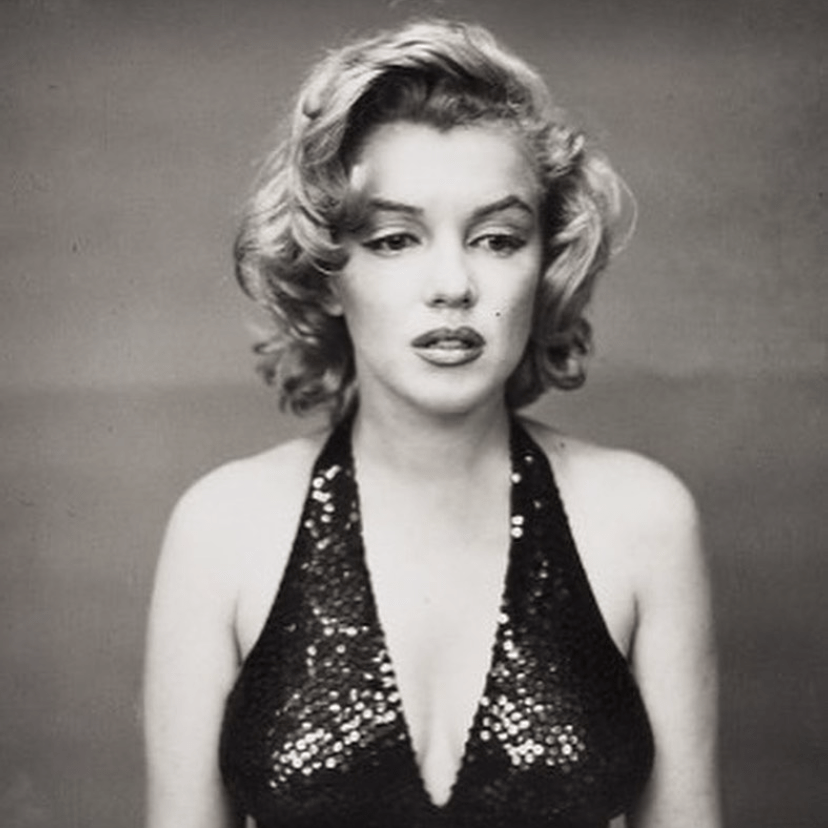
American actress and singer Marilyn Monroe was BOTD in 1926. Born Norma Jean Mortenson in Los Angeles, California, her mother was frequently institutionalised for mental illness, and she was raised in orphanages and by a series of foster parents. She became a popular photographic model, leading to a Hollywood studio contract in 1946, taking the name Marilyn Monroe. After a series of minor roles and a now-infamous nude calendar spread, she turned heads with cameos in The Asphalt Jungle and All About Eve, attracting a devoted fan base. She became a fully fledged movie star with “ditzy blonde” roles in comedies Gentlemen Prefer Blondes, How to Marry a Millionaire andThe Seven Year Itch. With the help of choreographer Jack Cole, Monroe constructed a sultry, teasingly sexual public image, featuring platinum blonde hair, figure-hugging gowns, a breathy little-girl voice and a swaying walk emphasising her hourglass figure. She became one of Hollywood’s most popular stars and an international sex symbol, attracting unprecedented levels of public attention. Her 1954 marriage to baseball player Joe DiMaggio became a tabloid sensation, as did their separation a year later. Painfully shy, an avid reader and increasingly frustrated by her “dumb blonde” typecasting, Monroe sought to diversify her career, studying Method Acting in New York and taking a dramatic role in the 1956 film of William Inge‘s play Bus Stop. She won critical acclaim for her role in the cross-dressing comedy Some Like It Hot, having an affair with her screen partner Tony Curtis, and effortlessly stole the show in The Prince and the Showgirl, to the fury of her director/co-star Laurence Olivier. In 1956, she married playwright Arthur Miller, who wrote the screenplay for her final produced film, The Misfits. The filming had a troubled production, exacerbated by Miller’s on-set affair with Inge Morath, and Monroe’s deteriorating mental health. Her frequent illnesses and increasing dependence on tranquilisers and alcohol led to her being fired from the comedySomething’s Gotta Give. She made her last public appearance in May 1962, singing Happy Birthday in a sheer “nude” dress at a gala for a delighted President John F. Kennedy (with whom she is thought to have had an affair). She spent her final months as a recluse, dying from an overdose of sleeping pills in what was ruled a probable suicide. She was 36. Monroe was a vocal supporter of gay rights (“When two people love each other,” she once said in an interview, “who cares what colour or flavour or religion they are? It’s two human beings. It’s beautiful. Love is beautiful. It’s that simple”) and defended her friend Montgomery Clift from homophobic abuse in the press. Her posthumous image as a sensitive and insecure woman destroyed by fame and abusive men endeared her to many LGBT fans, epitomised in Elton John‘s best-selling tribute song Candle in the Wind. Her performance of femininity and sexuality has been the subject of extensive queer scholarship (notably by Camille Paglia), while her film musical performances have been memorably copied by Madonna and countless drag queens. She has been portrayed frequently onscreen, most notably by Mira Sorvino and Ashley Judd in the 1996 TV film Norma Jean and Marilyn (in which the actresses played the warring personae of Monroe’s divided self), by Michelle Williams in My Week With Marilyn and by Ana de Armas in Blonde, a controversial 2022 biopic based on Joyce Carol Oates’ fictionalised biography of Monroe.
Marilyn Monroe

 Super Gays Born on this Day