
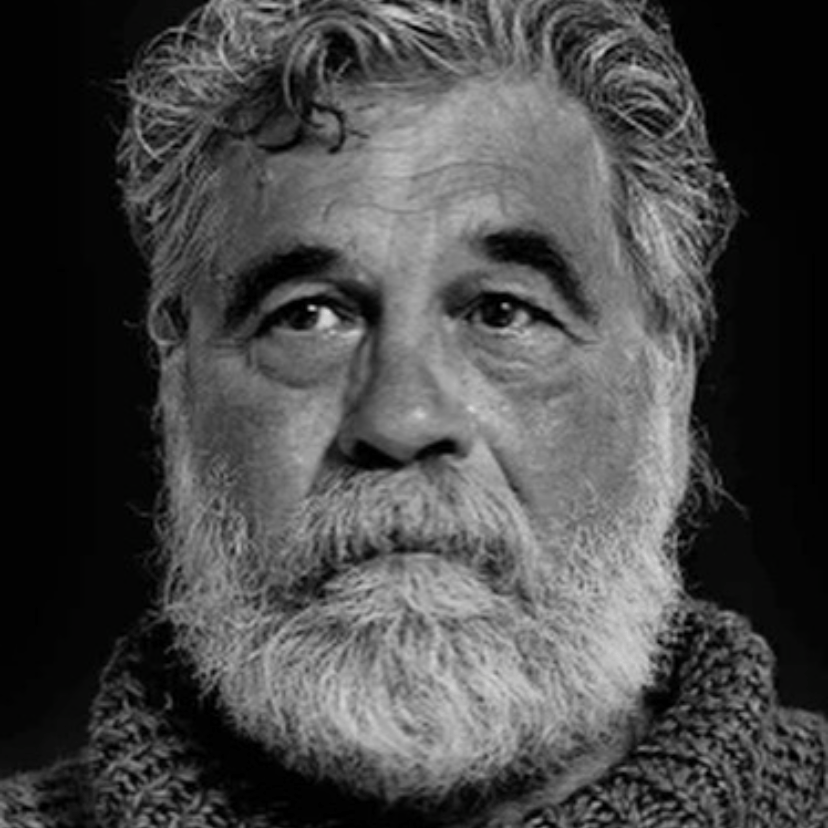
English writer Terence (T. H.) White was BOTD in 1906. Born in Bombay in British India, where his father was a superintendent in the Indian police, he had a troubled childhood, affected by his father’s alcoholism and his parents’ eventual separation. Shipped back to England to be educated at private schools, he studied at Cambridge University and later became a teacher. He attained critical success with an auto-fictional memoir England Have My Bones, published in 1936. He settled in the Channel Islands in 1946, where he lived as a recluse for the rest of his life. His is best known for his novel quartet The Once and Future Thing, translated from and based on Sir Thomas Malory’s medieval text Le Morte d’Arthur. The novel series became the source material for Alan Jay Lerner and Frederick Loewe‘s 1960 stage musical Camelot, later adapted into a successful film. His 1951 book Goshawk, an account of his attempt to train a wild hawk using traditional falconry techniques, was published at the insistence of his agent David Garnett. He also published two works of social history, The Age of Scandal and The Scandalmonger, in the early 1950s. A life-long bachelor, White had no known relationships with men or women. White’s biographer and friend Sylvia Townsend Warner speculated that he was “a homosexual and a sado-masochist,” referencing his diary entries describing his love for a young boy: “the whole situation is an impossible one. All I can do is behave like a gentleman. It has been my hideous fate to be born with an infinite capacity for love and joy with no hope of using them.” White died in 1964 aged 57. His writings have been cited as influences on J. K. Rowling’s Harry Potter series and Gregory Maguire‘s Wizard of Oz-prequel Wicked.
T. H. White

 Super Gays Born on this Day