
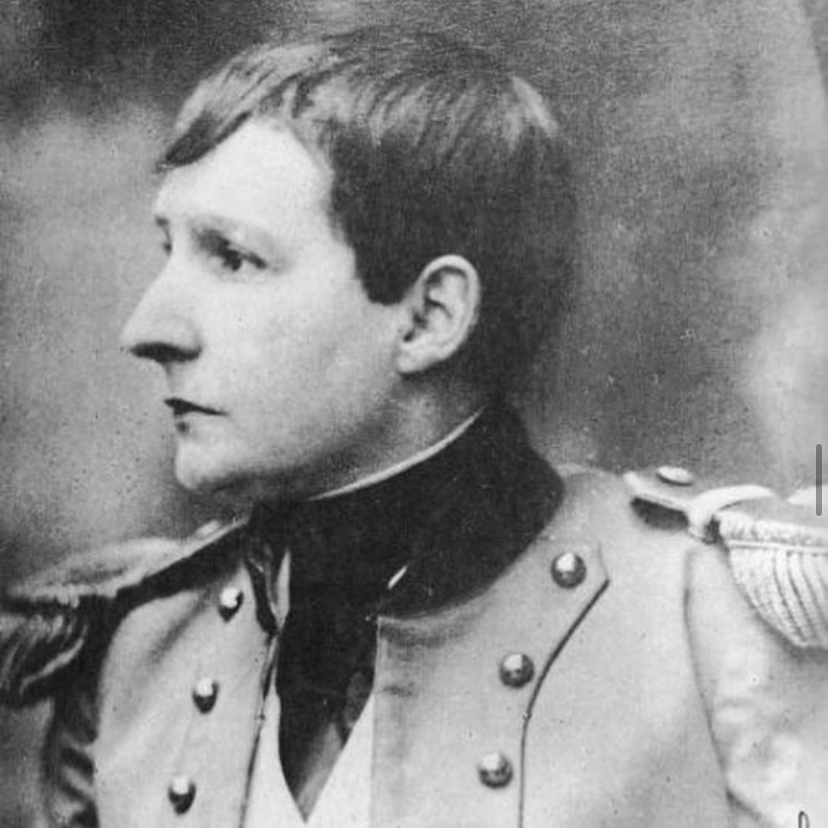
French aristocrat and artist Mathilde de Morny was BOTD in 1863. Born in Paris, she was the youngest child of Charles Duc de Morny, the half-brother of Emperor Napoleon III. After the Duke’s sudden death, her mother married Spanish nobleman José Osorio y Silva in 1869, moving her family to live with him in Deauville, at the time a conclave for displaced Spanish aristocrats. After the restoration of the Spanish monarchy in 1874, the family moved to Madrid, where Mathilde grew up in Spanish Royal court. As an adolescent, she met the cross-dressing female toreodor La Fragosa, who told her “Whatever a man can do, a woman can do too”, profoundly influencing her later life. In 1881, she entered into a marriage of convenience with Jacques Godart, the 6th Marquis de Belbeuf and a well-known homosexual, giving them freedom to pursue same-sex affairs with others. In 1897, she separated from Godart and began dressing in tailored men’s suits from Savile Row, calling herself “Max”, “Missy” or “Monsieur le Marquis”. She quickly became a celebrity of Parisian high society, having an affair with the courtesan Liane de Pougy, fighting duels with male opponents and exercising nude in front of invited female guests at her home. In 1906, she began a relationship with the writer Colette, living together in the Belle Plage villa. The following year, they staged a pantomime Rêve d’Égypte (Dream of Egypt) at the Moulin Rouge, sharing a kiss during a simulated lesbian love scene. The scene caused a riot at the theatre, forcing the early closure of the show and requiring them to live more discreetly. In 1910, Colette purchased Rozven manor at Saint-Coulomb, where she and de Morny lived together. Following their separation in 1911, de Morny returned to Paris and became increasingly reclusive. Little is known about the remainder of her life. In 1944, after an unsuccessful attempt at hara-kiri, she committed suicide by gassing herself. She was 80. Colette used her as the inspiration for the cross-dressing La Chevalière in her 1932 novel Le Pur et l’impur (The Pure and the Impure). She was played by Denise Gough in the 2018 biopic Colette.
Mathilde de Morny

 Super Gays Born on this Day