
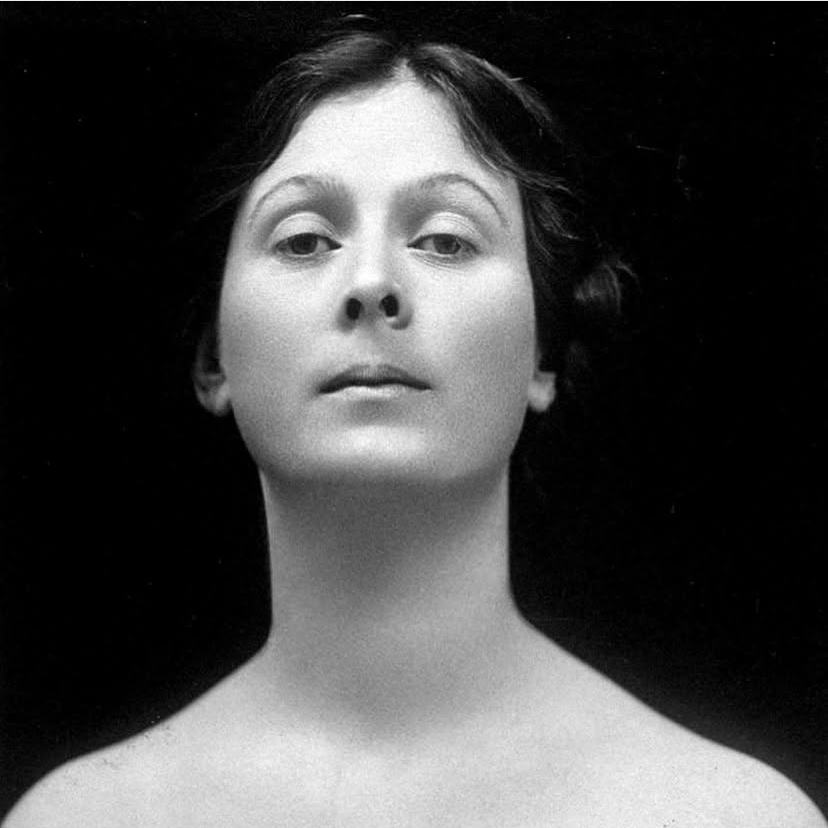
American dancer and choreographer Isadora Duncan was BOTD in 1877 or 1878. Born in San Francisco, she was raised in poverty by her music teacher mother, and began dancing as a child. Bored by the rigidity of classical ballet, she developed her own dance style based on natural movement. Her early performances in Chicago and New York City met with little success, and at 21, she moved to England to pursue her career in Europe. In London, she studied classical Greek sculpture at the British Museum and began incorporating classical poses and costumes into her work. She began performing in private receptions given by London society hostesses, notably the actress Mrs Patrick Campbell, who became her sponsor and champion. In 1905, she toured Russia, making a deep impression on ballet star Mikhail Fokine, who later incorporated her style into his choreography for the Ballets Russes. She became one of the most celebrated dancers in Europe, founding dance schools in Germany, Russia, and the United States. She became equally (in)famous for her unconventional love life, having two children out of wedlock with her lovers Gordon Craig and Paris Singer. She had a number of relationships with women including Mercedes de Acosta, Mary Desti and possibly Eleonora Duse. In 1913, tragedy struck when Duncan’s children and their nurse were drowned after their car crashed into the River Seine. Her third child, born soon after, died in infancy, and her plans to mount a new tour were stalled by the outbreak of World War One. In 1922, she married Sergey Aleksandrovich Yesenin, a Russian poet 17 years her junior, travelling with him on a tour of the United States. With American anti-Communist hysteria at its peak, they were both accused of being Communist agents and cut short the tour, with Duncan vowing never to return. After Yesenin committed suicide in 1925, Duncan lived a nomadic life for the next two decades, moving between New York, Paris, the Soviet Union and France, and struggling with depression, debt and alcoholism. She died in 1927 after her neck scarf became caught in the wheels of her moving car, pulling her from the vehicle and breaking her neck. She was 50 (or 49, depending on which birthdate you believe). Now recognised as one of the founders of modern dance, she has been portrayed frequently onscreen, notably by Vanessa Redgrave in the 1968 film Isadora.
Isadora Duncan

 Super Gays Born on this Day