
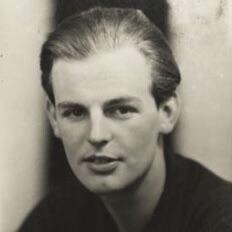
English diplomat and spy Donald Maclean was BOTD in 1913. Born in London, he was the son of Scottish politician and attorney Sir Donald Maclean. He was educated at Cambridge University, where he became a Socialist, joining a left-wing and largely homosexual friendship circle including Anthony Blunt, Guy Burgess and Kim Philby. He is thought to have been recruited by Soviet intelligence operatives while at Cambridge, withdrawing from the Communist Party so as not to arouse suspicion. After graduating, he joined the Foreign Office in 1934, and began supplying classified information to the Soviets. As Europe moved towards war, he was transferred to Paris in 1938, where he met and married American heiress Melinda Marling, with whom he had a child. Following the Nazi occupation of France, they fled to America in 1940, where Maclean was appointed first secretary to the British Embassy. He continued to work as a spy, passing secret material to the Soviets about the development of atomic energy and the formation of the North Atlantic Treaty Organisation (NATO), while helping develop Anglo-American policy for the Korean War. A known bisexual and a rampant alcoholic, Maclean was often observed in drunken stupors at parties, soliciting for sex with men. He was eventually recalled by the British government in 1948, and transferred to Cairo, Egypt where he served as chancery for the British Embassy but was recalled again in 1950 over concerns about his alcoholism. Somehow, he was appointed head of the American Department of the Foreign Office, returning to Washington in 1951. Later that year, the CIA determined that Maclean was a Soviet spy, and revoked his access to the Atomic Energy Commission. Tipped off by fellow spy Kim Philby that his cover was blown, he fled to England. Three days before they were due to be arrested by British intelligence, Burgess and Maclean escaped to the Soviet Union. On their arrival in Moscow, they were welcomed as national heroes and given the rank of KGB Colonel. The following year, Melinda and their children joined Maclean in Moscow. Burgess and Maclean’s whereabouts were unknown until 1956 when they gave a press conference to Western journalists, confirming their defection and long-standing allegiance to Communism. The revelation of a spy ring at the heart of Britain’s government caused an international scandal, severely damaging Anglo-American diplomatic relations and solidifying popular views of gay men as deceitful and traitorous. Maclean worked hard to adapt to the Soviet culture, learning Russian and advising the Soviet government on Western economic policy and foreign affairs, and was rewarded with a generous salary and comfortable accommodation. He wrote several publications on economics, which were published in the Soviet Union and Britain. He continued to drink heavily, becoming violent when drunk. In 1966, Melinda began an affair with Philby, who had defected to the Soviet Union three year before. She and Maclean formally separated in 1968, and she lived with Philby until 1979, when she returned permanently to America. Maclean died of a heart attack in 1983, aged 69. Hailed by the Soviets as a national hero, his ashes were returned to England for burial. He has been portrayed several times onscreen, notably by Rupert Penry-Jones in the 2003 TV drama Cambridge Spies and by Daniel Lapaine in 2022’s A Spy Among Friends.
Donald Maclean

 Super Gays Born on this Day