
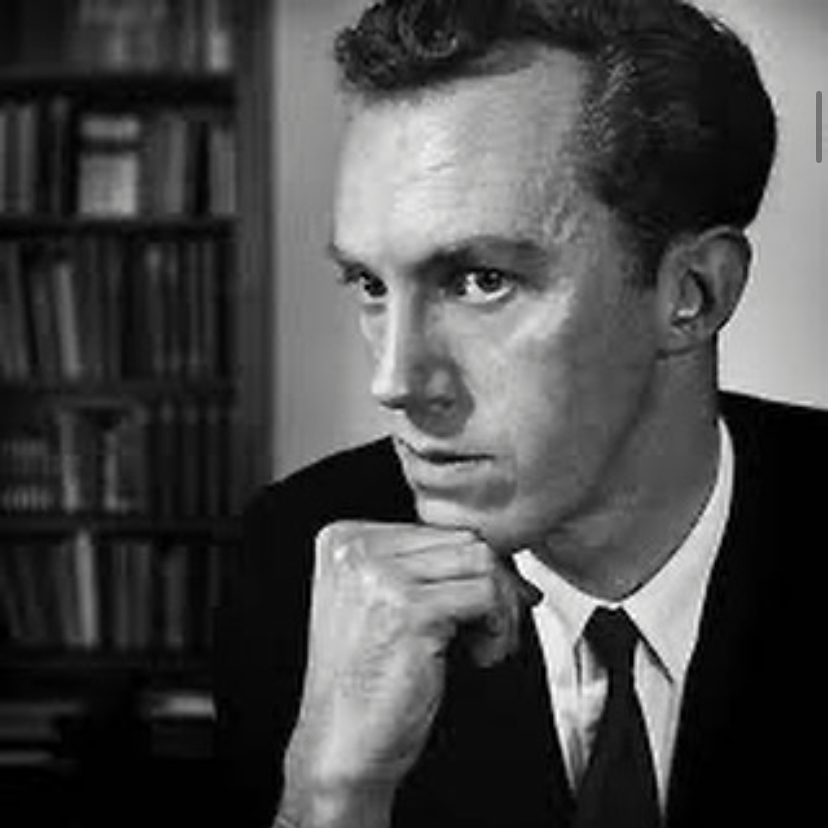
English journalist and activist Peter Wildeblood was BOTD in 1923. Born in Alassio, Italy to English parents, he was raised in East Sussex. In 1941, won a scholarship to Oxford University, dropping out after ten days due to ill health. He joined the Royal Air Force, and was sent to Southern Rhodesia for flight training. After several crashes, he was grounded and reassigned to the Army’s meteorological branch. After the war, he returned to Oxford to complete his degree, and then moved to London, working as a freelance journalist for Vogue, Printer’s Pie and Punch and exploring London’s underground gay culture. In 1950, he became a journalist for the Daily Mail, eventually becoming the newspaper’s diplomatic correspondent. In 1952, he began an affair with RAF corporal Edward McNally. Wildeblood’s life and career imploded in 1954 when he and his aristocratic friends Lord Montagu and Michael Pitt-Rivers were charged with gross indecency and conspiracy to incite others to commit buggery. The charges dated from a weekend party in 1952 at Lord Montagu’s estate attended by Pitt-Rivers, Wildeblood, McNally and another RAF serviceman John Reynolds. Two years later, Wildeblood and Montagu’s letters to McNally and Reynolds were discovered by the RAF and turned over to the police, who offered them immunity if they gave evidence in court. During the trial, Wildeblood admitted to his relationship with McNally, making him one of the first men in Britain to publicly (and unapologetically) identify as homosexual. He and Pitt-Rivers were found guilty and sentenced to 18 months in prison, while Montagu was given a one-year sentence. Their convictions sparked a national debate about Britain’s repressive laws against homosexuality. Dismissed from his Daily Mail job, Wildeblood found it difficult to secure work after his release from prison, and bought a drinking club in Soho. In 1955, he published Against the Law, a frank account of his sexuality, trial and imprisonment, in which he advocated for the decriminalisation of homosexuality. The book was widely praised, prompting debates in Parliament and the establishment of the Wolfenden Committee to review Britain’s laws around homosexuality and prostitution. Wildeblood followed the success of Against the Law with an essay collection A Way of Life and two novels about contemporary gay life, The Main Chance and West End People. He and Pitt-Rivers were the only openly gay witnesses to testify before the Committee. In the 1960s, Wildeblood became a successful writer and producer for Granada TV. In the 1970s, he accepted a lucrative offer from the Canadian Broadcasting Corporation and moved to Vancouver, where he lived for the rest of his life, eventually becoming a Canadian citizen. A stroke in 1994 left him a quadraplegic and unable to speak, though he continued to work, learning to communicate by accessing a computer through movements of his chin. He died in 1999, aged 76. Now considered a pioneer of Britain’s gay rights movement, he was portrayed onscreen by Martin Hutson in the TV film A Very British Sex Scandal and by Daniel Mays in Against the Law.
In the early 1970s, Peter accepted an offer from the Canadian Broadcasting Corporation and moved to Toronto. He became a Canadian citizen, and for the next 16 years wrote and produced a number of successful series.
He then retired to a wooden Edwardian cottage in Victoria, with views across the Juan de Fuca Straights to the snow-clad Olympic Mountains above Seattle. Here he cooked oriental meals, created a minute garden of exotic plants to attract humming-birds, and photographed an amiable raccoon, which liked to sit in the branches of a pear tree.
Sadly, this idyllic retirement was shattered by a disaster even greater than that which had ended his first career. Five years ago a stroke left him speechless and quadriplegic. His brain was unaffected, and after a brief period of near despair – which eased as soon as he could breathe without the ventilator – he learnt, in an astonishingly short time, to
There was no looking back. Peter wrote letters, gave orders, arranged his garden and, though speechless, was as witty and lively as ever. “After a lifetime of one-finger typing,” he observed in his first fax, “I think I can master one-chin typing.”
Peter Wildeblood will be very much missed, especially by those who cared for him in his last years and who witnessed the man’s inner strength.

 Super Gays Born on this Day