
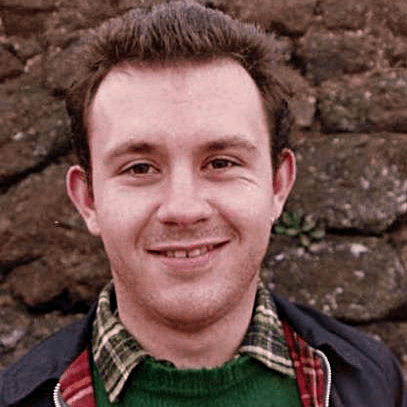
English activist Mark Ashton was BOTD in 1960. Born in Oldham, Manchester he was raised in in Portrush in Northern Ireland. He studied at the Northern Ireland Hotel and Catering College, before moving to London in 1978, to live openly as a gay man. He worked as a barman at the Conservative Club, often in full drag, which apparently went unnoticed by his right-wing clients. In 1982, he joined the Communist Party, becoming involved in tenants’ rights, anti-racist and nuclear disarmament movements. The following year, he and his friend Mike Jackson founded Lesbians and Gays Support the Miners to raise funds for striking coal miners in North England and Wales. He co-organised the Pits & Perverts concert in London, raising £20,000 for their cause. After Prime Minister Margaret Thatcher blocked the National Union of Miners’ funds, the LGSM began engaging directly with mining towns in South Wales, creating an unlikely alliance between urban gay men and rural mining communities. In 1985, the National Union of Miners returned the favour, joining Ashton and his colleagues in London’s Pride march, also lobbied for the adoption of union policies to support lesbian and gay rights. Ashton later became involved in a lengthy strike by London print workers, famously wrestling a wooden truncheon from a policeman. He remained protesting on the picket lines until his admittance to hospital in February 1987. He died 12 days later from an AIDS-related illness, aged 26. His death prompted a number of tributes from the LGBT and mining communities, leading to the establishment of the Mark Ashton Trust to support people living with HIV/AIDS. His life inspired the song For a Friend, written by Richard Coles and Jimmy Somerville as part of pop band The Communards, which appeared on their 1987 album Red. Ashton was played by Ben Schnetzer in the 2015 film Pride, recounting the work of LGSM. In 2017, on what would have been Ashton’s 57th birthday, a blue plaque was erected in his honour outside Gay’s the Word bookshop in London, the site of the LGSM’s first meetings.
Mark Ashton

 Super Gays Born on this Day