
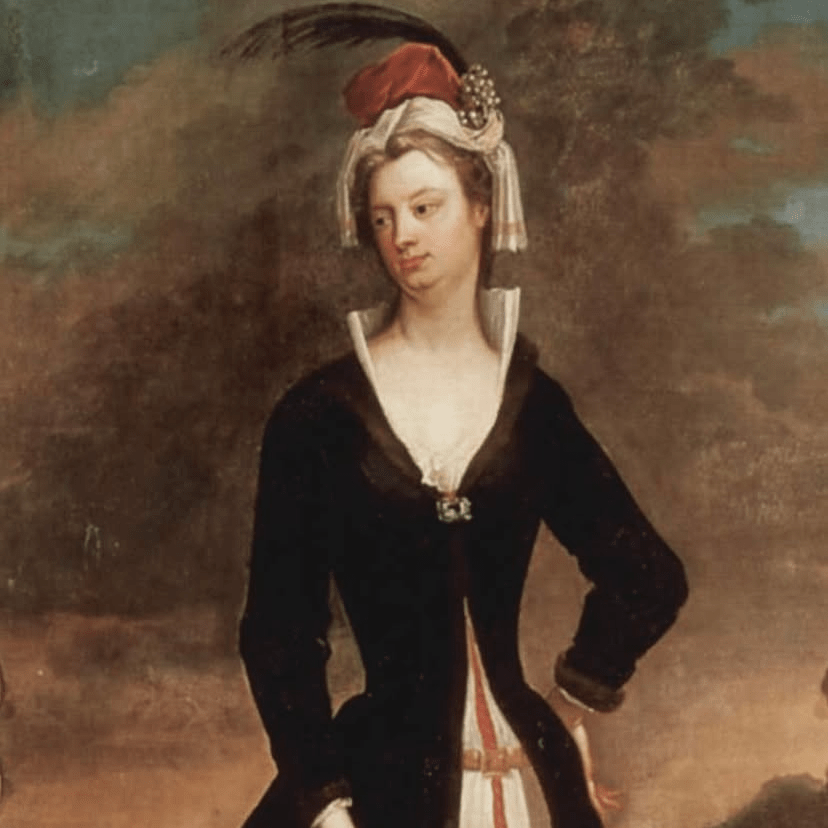
English travel writer and poet Lady Mary Wortley Montagu was BOTD in 1689. Born Mary Pierrepont at the family’s estate near Nottingham, she was the daughter of the 5th Earl of Kingston-upon Hull and Lady Mary Fielding. She was raised at Thoresby Hall in Budby, largely educating herself via regular reading in the family library. By 14, she had taught herself Latin and written two poetry collections, an epistolary novel and a romance. In 1712, faced with an arranged marriage to the appallingly-named Viscount Clotworthy Skeffington, she eloped with Edward Wortley Montagu. They established themselves in London, having three children together. Mary became a prominent socialite, consorting with Alexander Pope, Sarah Churchill Duchess of Marlborough, Lady Walpole and the notorious homosexual Lord Hervey. Her social standing crashed in 1715 after an attack of smallpox and the leak of her satirical portraits of life at court. In 1716, the Montagus moved to Constantinople, where Edward was appointed British ambassador, remaining there for two years. Mary recorded her observations of life in the Ottoman Empire in a series of letters to friends, providing detailed insights into Ottoman fashions and customs, descriptions of female-only hammams and zenanas and her admiration for the teachings of the Qu’ran. She also critiqued many of the Orientalist assumptions of other (male) travel writers, deriding descriptions of hammamms as sites for “unnatural sexual practices”. In 1717, she witnessed the Ottoman practice of inoculation against smallpox, arranging for her children to be immunised. On her return to England in 1718, she is credited with introducing and popularising the smallpox vaccine into England. Later in life, she warred with her children as they made inappropriate marriages, and began an affair with Count Francesco Algarotti. In 1739, she left England to live with Algarotti in Italy, eventually settling in Venice. After Edward’s death in 1761, she undertook a long journey back to England, returning in January 1762. She died of cancer later that year, aged 73. Her letters were published in 1763 as Turkish Embassy Letters, becoming an immediate bestseller, and read by everyone from Voltaire to Jane Austen. Her travel writings helped popularise female travel writing during the 19th and early 20th century, notably the work of Gertrude Bell. Feminist historians have noted Mary’s intense and erotically-charged interest in Ottoman women, and her sympathetic descriptions of eunuchs.
Lady Mary Wortley Montagu

 Super Gays Born on this Day