
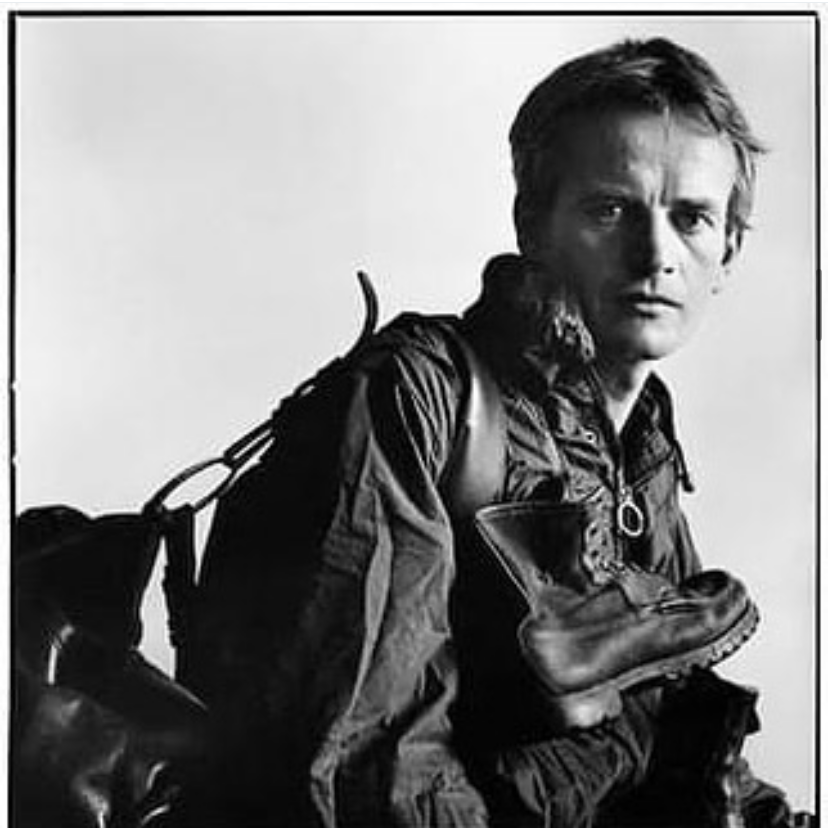
English travel writer and novelist Bruce Chatwin was BOTD in 1940. Born in Sheffield to a prominent middle-class family, he attended Marlborough College, forgoing university to become an antiques dealer at Sothebys. After studying archaeology at the University of Edinburgh, he began writing for the Sunday Times, famously quitting his job in 1974 to travel to Patagonia in southern Argentina. His resulting book In Patagonia was published in 1977. Abandoning the objective third-person voice, he wrote in the first person with a lean, poetic style, constructing his narrative with anecdotes and eccentric character portraits. The book became an international sensation, reinvigorating the travel writing genre and making him a literary celebrity. Chatwin later acknowledged the influence of 1930s travel writer Robert Byron on his work, writing a foreword to a reprinting of Byron’s book The Road to Oxania. Further success followed with The Songlines, Chatwin’s idiosyncratic attempt to explain Australian Aboriginal culture, and his novels On the Black Hill and Utz. His writing style became widely imitated, and his fondness for Moleskine notebooks helped relaunch the brand. Chatwin married Elizabeth Chanler in 1965, with whom he had an open marriage, pursuing affairs with director James Ivory, designer Jasper Conran and photographer Robert Mapplethorpe. In 1996, Chatwin was diagnosed HIV positive, which he kept secret, telling outlandish stories to doctors and friends about contracting the disease via gang rape in Dahomey or exploring bat caves in Indonesia. He died in 1989 of an AIDS-related illness, aged 48. Details of his sexuality and diagnosis became public after his death, and were confirmed by his biographer Nicholas Shakespeare. Now considered one of the most influential travel writers of the 20th century, his work has also drawn criticism for fabricating many of his stories and his colonialist attitudes to his subjects.
Bruce Chatwin

 Super Gays Born on this Day