
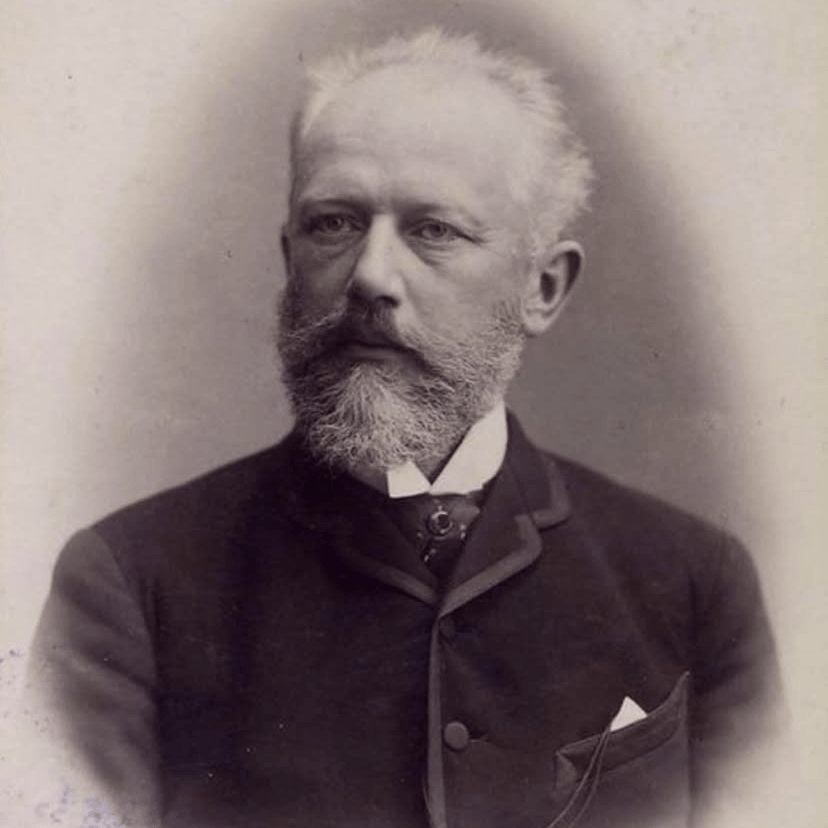
Russian composer Pyotr Ilyich Tchaikovsky was BOTD in 1840. Born in Votkinsk, he was educated to join the civil service. After a brief and disastrous career, he attended the newly-formed Saint Petersburg Conservatory where he studied Western European music theory, setting him at odds with his traditionalist peers. He became the most celebrated Russian composer of his generation, enjoying international success. His ballet scores for Swan Lake and The Nutcracker are now standards of the classical repertoire, as is his 1812 Overture, written to commemorate Russia’s military victory in the Napoleonic Wars. His opera Eugene Onegin, based on Alexander Pushkin’s narrative poem, was his most autobiographical work, suffused with male narcissism and unrequited sexual longing. Tchaikovsky’s homosexuality was confirmed by his own brother, who described his habit of dropping by to observe the Cadet Corps: “He does it for the love of art and adores men with beards”. After a brief, catastrophic marriage, he went abroad for several years. Returning to Russia in 1884, he was hailed as a national celebrity, promoted to the nobility and paid a stipend by the Tzar. He died in 1893, officially of cholera, but now suspected to be suicide.
Pyotr Tchaikovsky

 Super Gays Born on this Day