
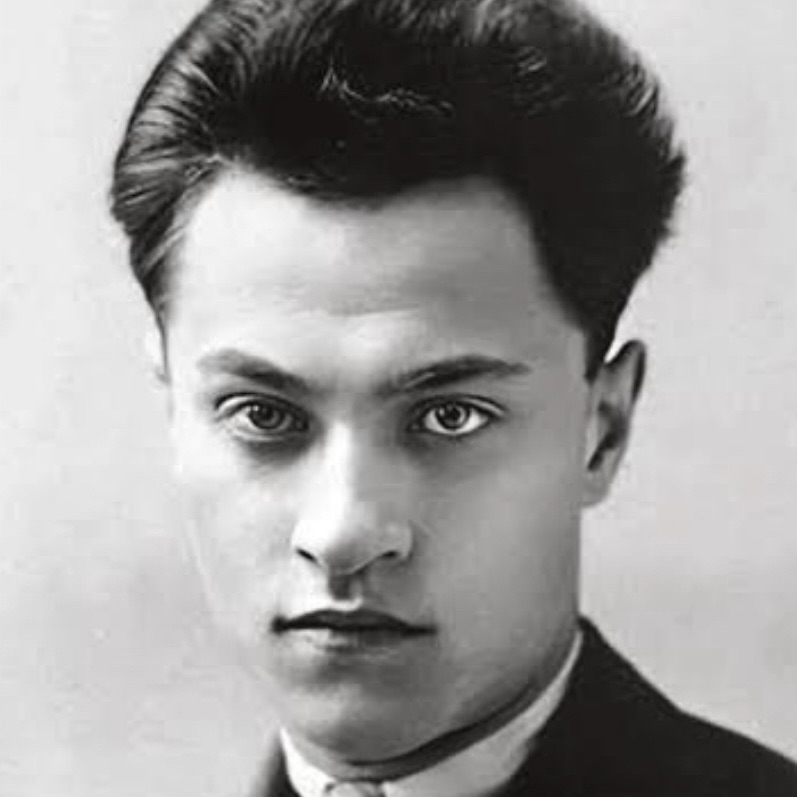
French poet Jean Desbordes was BOTD in 1906. Born and raised in Rupt-sur-Moselle in the Vosges, he grew up with his mother and sisters on a farm near Fontainebleu. A brilliant student, he developed an early interest in literature. As a teenager, he discovered Jean Cocteau’s novel Le Grand Écart and wrote Cocteau a fan letter, enclosing samples his own writing. Cocteau replied “Your inner fire sets the pages ablaze… Calm down. You possess what no one in our time possesses: the intensity of depth.” In 1926, the 20 year-old Desbordes was called up for military service and sent to the navy in Brest. Cocteau intervened, arranging for him to be transferred to a naval administration post in Paris, in offices close to Cocteau’s apartment. Desbordes became Cocteau’s “secretary”, lover and protégé. “If God condemns me, I accept it,” Cocteau wrote to a friend. “I love him to the point of madness, of heresy, etc., all the way to hell.” Happily, Desbordes returned his affections, and together they enjoyed sex, travel and smoking opium. Cocteau arranged for the publication of Desbordes’ poetic essay J’Adore, which shocked Paris society with its explicit reference to homosexual desire. Desbordes’ sexual relationship with Cocteau ended after two years, but they continued to live and work together while he pursued an affair with Geneviève Mater. His other published works include the novel Les Tragédiens, the play La Mue, first performed by the Comédie-Française under the title L’Âge Ingrat, and a book of poems and essays, Le Vrai Visage du Marquis de Sade. He was also the model for a series of drawings made by Cocteau and published in his opera libretto for Oedipus rex, and appeared in Cocteau’s film La sang d’un poete (The Blood of a Poet). In 1933, Desbordes returned to live with his mother and sisters, before marrying Madeleine Peltier in 1937. In 1938, he was admitted to the Société des gens de lettres. At the outbreak of World War Two he joined the French Resistance, becoming the director of the F2 Marine Network and assisting with the Allied landing in Normandy. In 1944, he was arrested by the Nazis and imprisoned in Paris, where he was tortured to death, reportedly refusing to divulge any information to his captors. He was 38. He received a number of posthumous decorations for bravery, and his name was included in a memorial at the Panthèon, in honour of writers who died for France. Cocteau wrote about their affair in Le livre blanc, in which Desbordes is the unnamed lover “H”.
Jean Desbordes

 Super Gays Born on this Day