
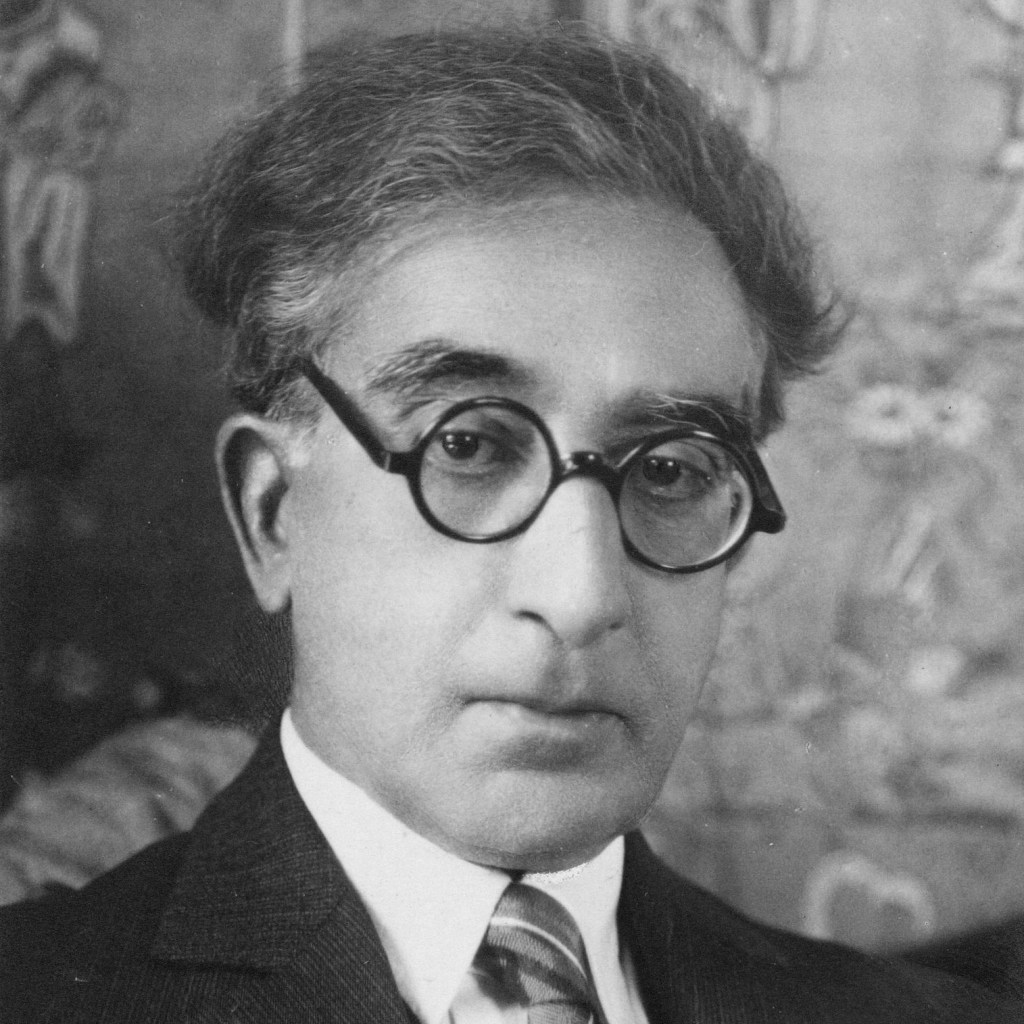
Greek-Egyptian poet Constantine P. Cavafy was BOTD in 1863. Born in Alexandria, Egypt, his parents were ethnic Greeks from Constantinople (now modern-day Turkey) who settled in Alexandria. After his father’s sudden death in 1870, his family moved to Liverpool, England, where Constantine went to school, becoming fluent in English and devouring European literature. The family to return to Alexandria in 1887 but were uprooted in 1882 when the British invaded the city, and fled to Constantinople. Now in his ancestral homeland, the 19 year-old Constantine began researching his Greek heritage and writing poetry. He moved to Alexandria in 1885, where he lived for the rest of his life, renting an apartment above a brothel in the old Greek quarter and working for the British-run Egyptian Ministry of Public Works. He published only about 200 poems in his lifetime, written in a mixture of antique and demotic (spoken) Greek. Dispensing with formal rhyme and writing in a spare, ironic and melancholy voice, his work was notable for its openness about homosexual desire. Concerned about censorship or potential prosecution, he circulated his work privately in self-published broadsheets and pamphlets. During World War One, he befriended the English writer E. M. Forster, who was working in Alexandria as a Red Cross volunteer. Determined to promote Cavafy’s work in the English speaking world, Forster made introductions to T. S. Eliot, who published translations of his poems in The Criterion. In 1922, Cavafy left his civil service job to write full-time. Despite his slight publication record, the Greek government awarded him the Order of the Phoenix in 1926 for his contribution to Hellenic literature. He died in 1933 on his 70th birthday. The first Greek-language collection of his poetry was published two years later, though with some censorship of his homoerotic themes. In the 1950s, the writer Lawrence Durrell referenced his poetry in his Alexandria Quartet novel series, boosting his popularity. His work also influenced the young David Hockney, who created a series of homoerotic drawings in 1967 inspired by Cavafy’s poems. In 1994, his poem Ithaca was recited at the funeral of Jacqueline Kennedy Onassis, launching him to worldwide recognition. Cavafy’s apartment in Alexandria has since been converted into a museum, and the street renamed in his honour. In 2024, an archive of his writings was opened in Athens, funded by the Aristotle Onassis Foundation.
Constantine P. Cavafy

 Super Gays Born on this Day