
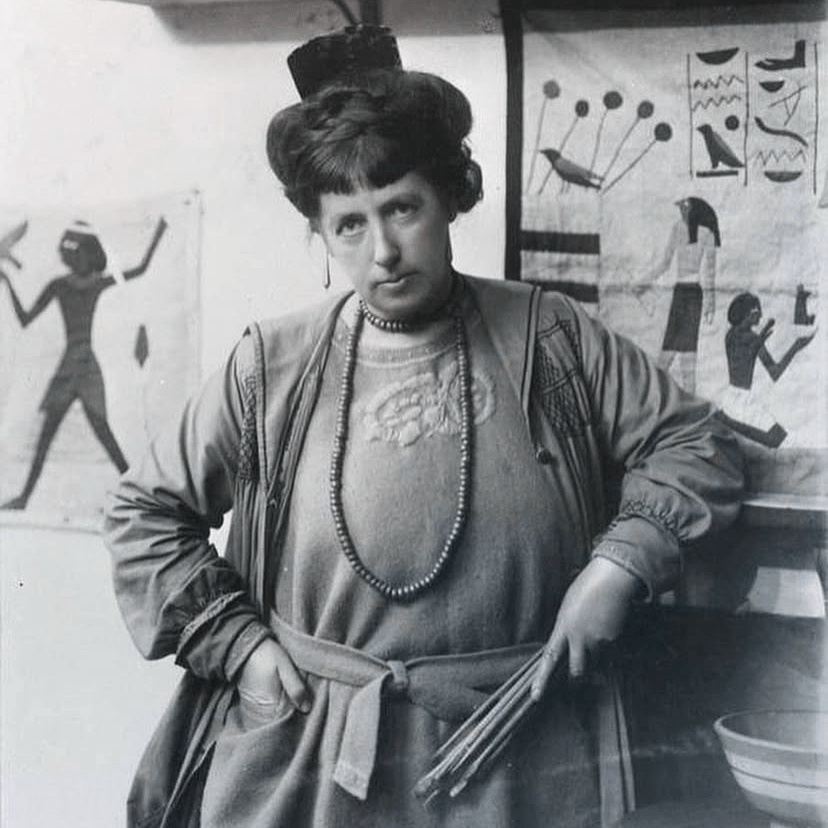
New Zealand painter Frances Hodgkins was BOTD in 1869. Born in Dunedin, she showed early artistic talent, exhibiting her work by her 20s and winning the Academy of Arts Prize in 1895. In 1901, she moved to London to study art, moving to an artists’ colony in St Ives during World War One and travelling extensively in Europe and North Africa. Taking inspiration from Henri Matisse and Pablo Picasso, she developed her own idiosyncratic style, fusing still life and landscape painting through a Modernist and Surrealist lens. A prominent figure in London’s post-war arts scene and a satellite member of the Bloomsbury Group, she socialised with Lady Ottoline Morrell and Duncan Grant and exhibited her work regularly. In 1940, she was invited to represent Britain at the Venice Biennale. Although there is no evidence of Hodgkins having met Virginia Woolf, academic Jocelyn Harris has speculated that Hodgkins was the model for Lily Bart, the risk-taking abstract painter in Woolf’s novel To the Lighthouse. Hodgkins never married or had children, and had a number of passionate, erotically-charged friendships with women, notably Dorothy Richmond. Hodgkins continued to paint into her 70s, dying in 1947, aged 78. Her reputation has grown steadily since her death, and she is now regarded as one of New Zealand’s greatest artists and a key figure in 20th century Modernism. In 1962, Otago University in Dunedin established the Frances Hodgkins Fellowship, a year-long artistic residency, in her honour.
Frances Hodgkins

 Super Gays Born on this Day