
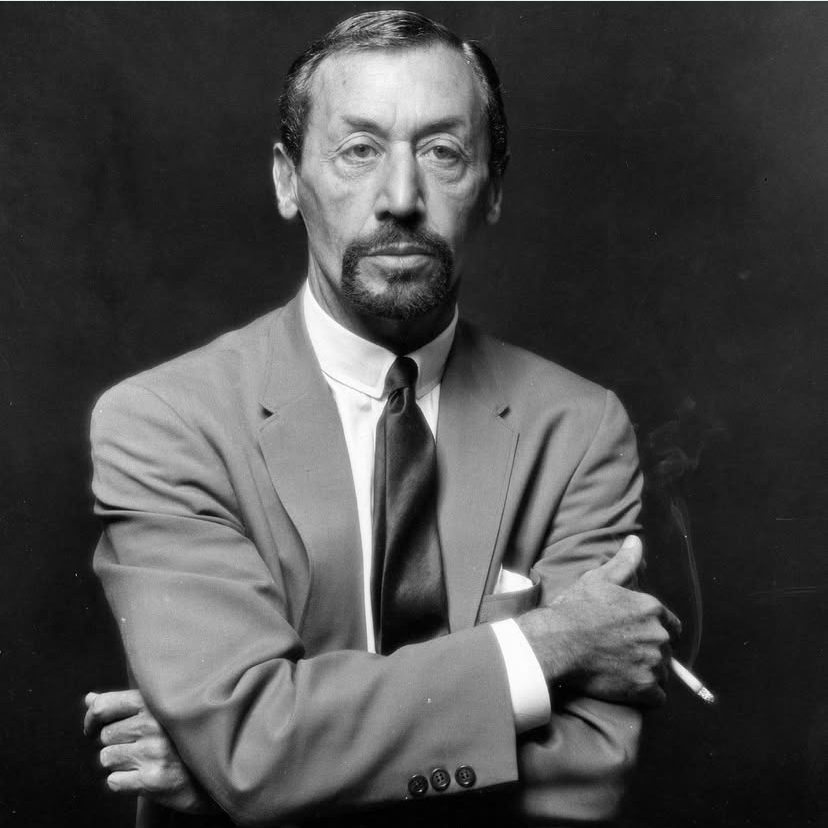
American dancer and choreographer Jack Cole was BOTD in 1911. Born John Richter in New Brunswick, New Jersey to a working-class family, his parents divorced when he was a child, abandoning him at boarding school. He attended Columbia University in New York, dropping out in 1930 to join the Denishawn Dancers, a modern dance troupe formed by Ruth St. Denis and Ted Shawn. During the Great Depression, he performed on Broadway and danced in nightclub acts at the Embassy Club and the Rainbow Room in New York. He developed a sharp, angular, energetic and distinctly modern dance form, drawing from Indian Bharatanatyam, Spanish flamenco, African-American and Cuban dance traditions. In 1940, he moved to Hollywood, and was headhunted to perform a solo dance for the 1941 film Moon Over Miami. His scene was cut after studio executives expressed concern over his bare chest, pelvic thrusts and “male sensuality”. Undeterred, he returned to Broadway to choreograph Cole Porter‘s musical Something for the Boys starring Ethel Merman. His Hollywood breakthrough came when he worked with Rita Hayworth on the 1946 film noir Gilda, choreographing her sexually charged musical numbers. He established himself as the go-to choreographer for actresses, working with Betty Grable and Ann Miller and nurturing the careers of Gwen Verdun and Chita Rivera. As a gay man, he delighted in inserting queer subtext into big-budget Hollywood musicals: instructing Grable to fondle bare-chested hunks in 1951’s Meet Me After the Show, and surrounding Jane Russell with dozens of gyrating gay men in a gymnasium in Gentlemen Prefer Blondes. Cole worked closely with Marilyn Monroe for Blondes, choreographing her dance number for Diamonds Are A Girl’s Best Friend and working with her on five subsequent films. He made frequent returns to Broadway, choreographing the musicals Kismet, Man of La Mancha and Stephen Sondheim‘s A Funny Thing Happened on the Way to the Forum, and appeared with his dance troupe on TV variety shows throughout the 1950s. Later in life, he taught at the University of California Los Angeles. Known as a relentless perfectionist, he admitted to bullying and occasionally assaulting his students. Hailed as the father of theatrical dance jazz, his work influenced dancers and choreographers including Verdun (who worked as his assistant for many years), Gene Kelly, Bob Fosse, Jerome Robbins, Agnes de Mille, Tommy Tune and Alvin Ailey. Cole told Verdun that he had been married briefly in the 1930s, losing his wife in childbirth and arranging for his infant son to be raised by relatives. He was in a long-term relationship with the actor David Gray, living together in Los Angeles where they hosted “very naughty and very gay” poolside parties. They remained together until Cole’s death in 1974, aged 60.
Jack Cole

 Super Gays Born on this Day