
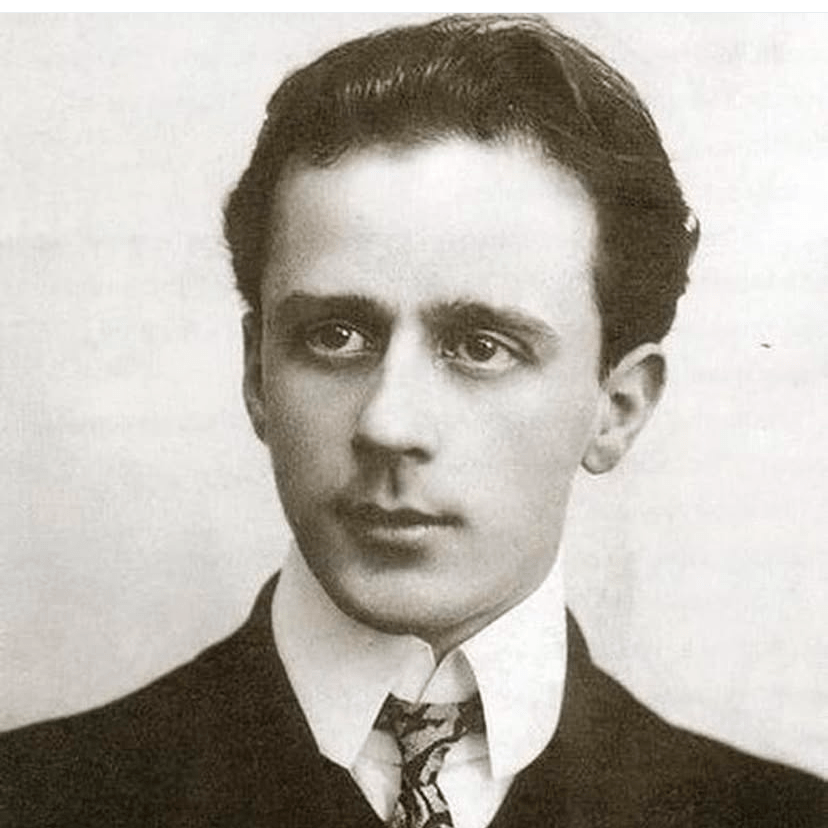
Russian dancer and choreographer Mikhail Fokine was BOTD in 1880. Born in St Petersburg, he was accepted into the Imperial Ballet School aged 9, making his first lead appearance with the Imperial Russian Ballet in 1898. He quickly became a star in Russia, admired for his good looks and athleticism. He married fellow dancer Vera Petrovna in 1905, with whom he had a son. He and fellow dancer Vaslav Nijinsky were also well-known in Russia’s homosexual underground in their youth, and are thought to have been lovers. Frustrated with the life of a dancer, he became a teacher and choreographer, creating his first full-length ballet, Acis et Galatée, in 1905 and the solo dance piece The Dying Swan for star ballerina Anna Pavlova. His ballet Chopiniana premiered in 1907 to great success, showcasing star dancers Pavlova, Nijinsky and Tamara Karsavina. Renamed Les Sylphides, it is now a standard of the classical repertory. In 1909, ballet impressario Sergei Diaghilev appointed him resident choreographer to the Ballets Russes. After the success of his ballet Cléopâtre, starring his protégée Ida Rubinstein, he went on to create the ground-breaking ballets Scheherazade, Le Spectre de la rose, L’Oiseau de feu (The Firebird) and Petrushka, showcasing Nijinsky’s athleticism and sexual charisma. He also created dances for Rubinstein’s dance company, set to Maurice Ravel’s orchestral pieces Bolero and La Valse. His 2012 ballet Daphnis et Chloé, starring Nijinsky and Karsavina and with music by Ravel, led to Fokine breaking with Diaghilev, whom he accused of sabotaging the premiere performance. Diaghilev persuaded him to return to the Ballets Russes in 1913, to replace the recently-dismissed Nijinsky. After initial success in the company’s London season, the outbreak of World War One disrupted the company’s touring schedule, and Fokine and Vera returned to Russia. In 1924, they emigrated to New York City, where they co-founded the American Ballet Company. His first original piece for the company was the comedy Bluebeard, presented alongside revivals of his Ballet Russes productions. Fokine continued to work and perform until his death in 1942, aged 62.
Mikhail Fokine

 Super Gays Born on this Day