
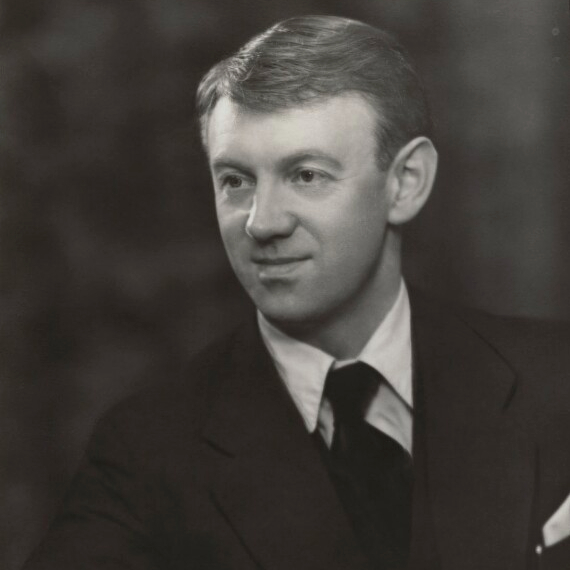
English writer James Kirkup was BOTD in 1918. Born and raised in South Shields, Tyneside, he studied at Durham University. During World War Two, he secured conscientious objector status and worked for the Forestry Commission. At the end of the war, he went to teach in Lille, spending his nights cruising for sex and dabbling in sex work. He returned to England and became a teacher, publishing his first poetry collection, The Drowned Sailor, in 1947, He befriended the writer and editor J. R. Ackerley, who published his poetry in The Listener, boosting his public reputation. Ackerley forced through the publication of Kirkup’s homoerotic poem The Convenience, despite his typists’ refusal to cooperate. Kirkup took up poetry fellowships at universities in Leeds and Bath before moving to London in 1955, socialising with writers including Muriel Spark and Stephen Spender. In 1956, he moved to Japan where he lived for 30 years, teaching at the Kyoto University of Foreign Studies and establishing the literary magazine Poetry Nippon. He became a noted translator, including an English-language version of Simone de Beauvoir‘s Memoirs of a Dutiful Daughter. In 1976, he became the centre of a censorship battle after his poem The Love that Dares to Speak its Name was published in UK magazine Gay News. Kirkup’s account of a Roman centurion fantasising about having sex with the crucified Jesus horrified conservatives, prompting campaigner Mary Whitehouse to bring a private prosecution against Gay News for blasphemous libel. The case became a media sensation, igniting debates about freedom of expression and the emerging gay rights movement. Gay Times lost the case, and an embarrassed Kirkup returned to Japan. During the 1990s, he moved to Andorra, publishing five volumes of autobiography and working as an obituary writer for The Independent. In 2002, he objected to a commemorative public reading of The Love That Dare Not Speak its Name, claiming that he was “being used”. He died in 2009, aged 91.
James Kirkup

 Super Gays Born on this Day