
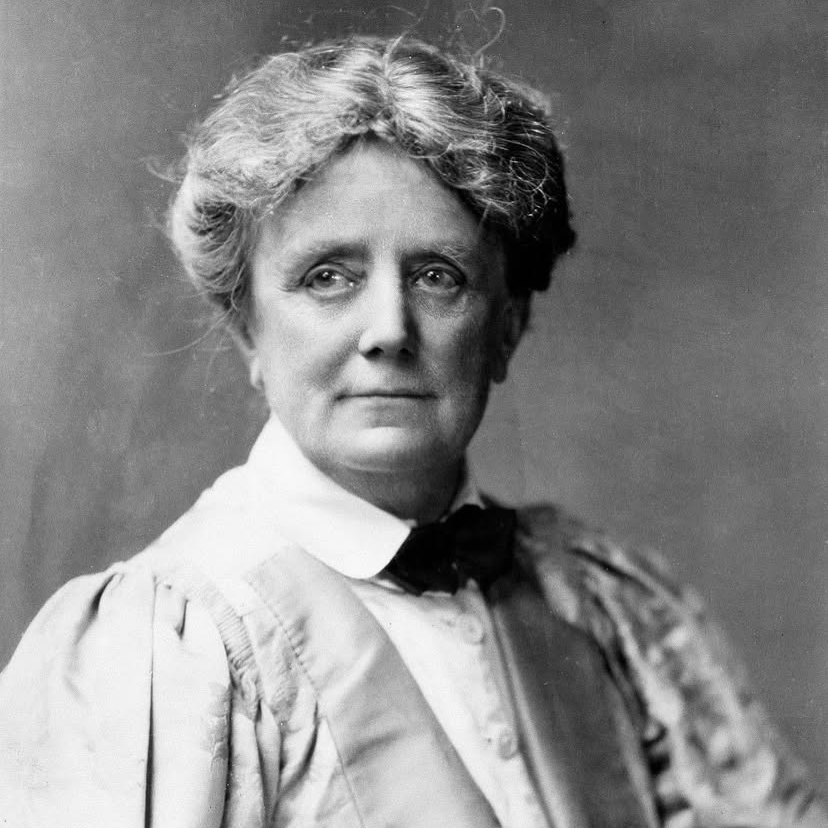
English composer and suffragette Ethel Smyth was BOTD in 1858. Born in Sidcup, Kent, to a military family, she showed early talent in music, performing and writing music by her early teens. After fighting a long battle with her father, she was allowed to study music at the Leipzig Conservatory in Germany. She left the Conservatory after a year and continued her studies privately, developing a crush on Lisl von Herzogenberg, the wife of her music professor, and meeting celebrity composers Antonín Dvořák, Edvard Grieg, Pyotr Ilyich Tchaikovsky, Clara Schumann and Johannes Brahms. Returning to England, she was mentored by Arthur Sullivan, who supported her ambitions to become a composer. She rose to public attention with her Mass in D, first performed in 1893 to critical acclaim. Her opera The Wreckers premiered in Leipzig, before being championed by Thomas Beecham and performed in London in 1909. Her 1903 opera Der Wald became the first opera by a female composer to be produced at the New York Metropolitan Opera. In 1910, she joined the women’s suffrage movement, giving up composing for two years to dedicate herself to campaigning. She developed a close friendship with Emmeline Pankhurst (with whom she may have had an affair), composing March of the Women which became the official anthem of the suffragette campaign. In 2012, she was imprisoned for two months after throwing stones at a politician’s house. While in prison, she led a women’s choir, directing them from her cell window using her toothbrush. A committed pacifist, she fell out with Pankhurst over the latter’s support of the British war effort. In 1922, she was created a dame, the first British female composer to be so honoured. A retrospective of her work was performed at London’s Royal Albert Hall in 1934 to celebrate her 75th birthday. (Smyth attended, despite having lost her hearing). Ethel Smyth had an affair with her librettist and friend Henry Bennet Brewster, confessing to him that “it is so much easier for me to love my own sex more passionately than yours.” She had a serious relationship with musician Violet Gordon-Woodhouse, and developed a crush on Virginia Woolf (who described Smyth’s attentions as “like being caught by a giant crab”). Smyth died in 1944, aged 86.
Ethel Smyth

 Super Gays Born on this Day