
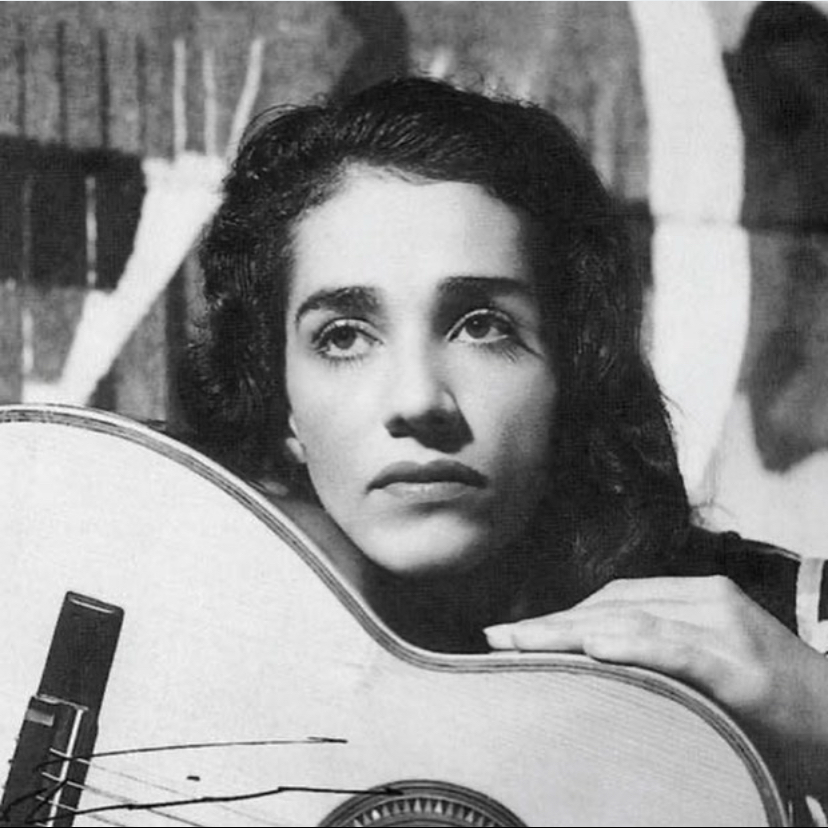
Costa Rican-Mexican singer Chavela Vargas was BOTD in 1919. Born in San Joaquín de Flores in Costa Rica, she was christened María Isabel Anita Carmen de Jesús Vargas Lizano, and nicknamed Chavela. Her parents divorced when she was a child and she was raised by an uncle, contracting polio and crediting her recovery to local shamans. She immigrated to Mexico City as a teenager where she launched her singing career. She became famous for her reinterpretations of Mexican ranchera, a song traditionally performed by men with guitars, trumpets and other instruments. Vargas performed in a stripped-down fashion with only a guitar, slowing down the songs’ tempo and singing with raw dramatic power. Openly queer since forever, she dressed in men’s trousers and ponchos, smoked cigars, carried pistols, drank tequila and pursued multiple affairs with women, to whom she dedicated her performances. She became the friend and lover of Mexican artist Frida Kahlo, living with Kahlo and her husband Diego Rivera for two years. She is also thought to have had an affair with American actress Ava Gardner. By 1961, she was one of Mexico’s most renowned performers, undertaking extensive tours of Mexico, the United States, France, and Spain, and recording more than 80 albums. Her career stalled in the 1970s as she struggled with alcoholism, disappearing from the stage for 15 years. She re-launched her career in the 1990s, championed by Spanish filmmaker Pedro Almodóvar who used her music in several of his films. She also appeared in the 2002 Kahlo biopic Frida, singing one of her classics La Llorona (The Weeping Woman), and made her debut at Carnegie Hall in New York, aged 83. Her final album La Luna Grande, released in 2011, was a homage to the poetry of Spanish poet Federico García Lorca, whose spirit she claimed to communicate with regularly. Vargas formally announced her homosexuality in her 2002 memoir Y si quieres saber de mi pasado (And If You Want to Know About My Past), also revealing her four-year relationship with human rights lawyer Alicia Elena Pérez Duarte. Among many late-career tributes, she received a lifetime achievement award from the Latin Recording Academy and the Orden de Isabel la Católica from the Spanish government for her contribution to music. Vargas died in 2012 aged 93. Her life and work was profiled in the 2017 documentary Chavela. In 2019, she was posthumously inducted into the Rainbow Honor Walk in San Francisco.
Chavela Vargas

 Super Gays Born on this Day