
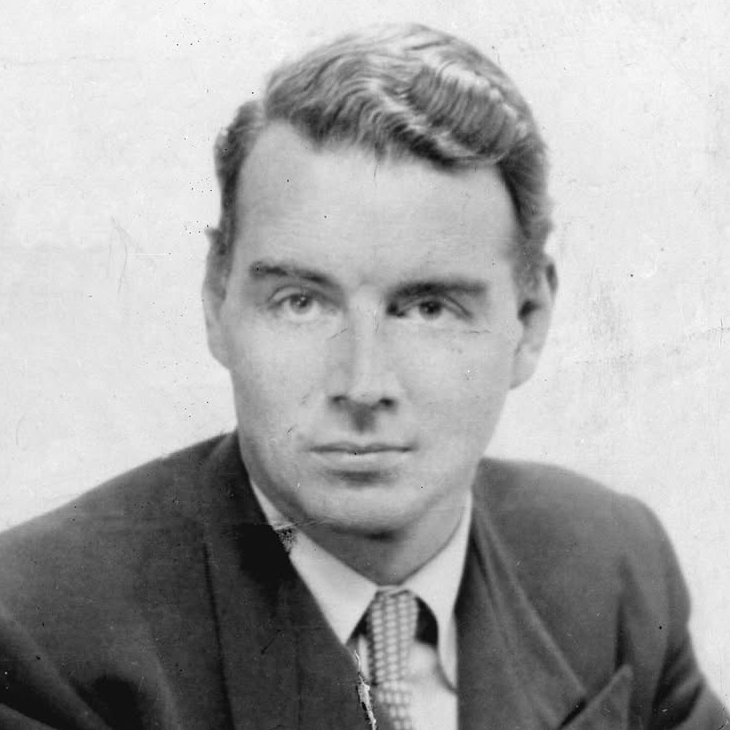
English diplomat and spy Guy Burgess was BOTD in 1911. Born in Devonport, Plymouth to an upper-class family, he was educated at Eton College and the Royal Naval College in Dartmouth. He studied at Cambridge University where he became a Socialist, and was recruited as a Soviet agent, probably by his lover Anthony Blunt. During the 1930s and 1940s, he worked for the BBC, MI6 and the Foreign Office, where he is thought to have passed thousands of classified documents to the Soviets. In 1951, he and fellow spy Donald Maclean, fearing exposure and prosecution, fled to the Soviet Union. Their whereabouts were unknown until 1956 when they gave a press conference to Western journalists, confirming their defection and long-standing allegiance to Communism. The revelation of a spy ring at the heart of Britain’s government caused an international scandal, severely damaging Anglo-American diplomatic relations and solidifying popular views of gay men as deceitful and traitorous. Though initially welcomed as a national hero in Russia, Burgess struggled with the homophobic attitudes of the Communist Party, though he was assigned a boyfriend, Tolya Chisekov, by Party officials. Friends who visited Burgess in Moscow reported a sad and lonely man who drank heavily and longed to return to England. He never left the Soviet Union, dying in 1963 of liver failure aged 52. His life has been dramatised many times, including Julian Mitchell’s play Another Country, filmed in 1984 and starring the young Rupert Everett; Alan Bennett’s play An Englishman Abroad, filmed for television in 1990 by John Schlesinger and starring Alan Bates; and the 2003 TV drama Cambridge Spies, starring Tom Hollander as Burgess. His story also inspired John Le Carré’s spy novel Tinker Tailor Soldier Spy.
Guy Burgess

 Super Gays Born on this Day