
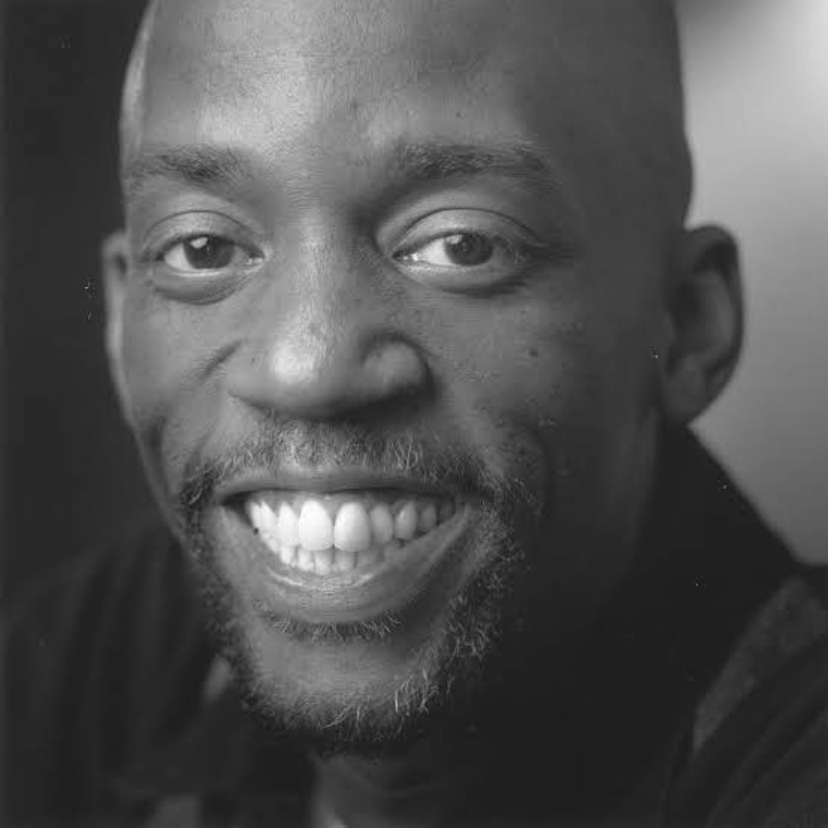
American writer, editor and activist Essex Hemphill was BOTD in 1957. Born in Chicago, Illinois, he was raised and educated in Washington D. C. He began writing poetry in his teens and studied journalism at the University of Maryland, leaving after his first year to pursue writing. He co-founded the spoken work group Cinque, becoming well known as a performance poet in Washington, and edited the 1979 Nethula Journal of Contemporary Literature to promote the works of contemporary Black artists. He rose to wider public attention in 1986 when his poetry appeared in the Black gay literary anthology In the Life, edited by Joseph Beam, with whom he formed a relationship. Later that year, he was awarded a poetry fellowship from the National Endowment of the Arts. Hemphill appeared in Isaac Julien‘s 1989 documentary Looking for Langston, a poetic examination of gay Black poet Langston Hughes and the Harlem Renaissance. He also collaborated with filmmaker Marlon Riggs on his documentaries Tongues Untied and Black Is…. Black Ain’t, exploring the intersection of African-American and gay identities. After Beam’s death from AIDS in 1988, Hemphill collaborated with Beam’s mother to finish Beam’s last anthology, Brother to Brother: New Writings by Black Gay Men. Published in 1991, it won a Lambda Literary Award. In 1992, Hemphill published his final collection, Ceremonies: Prose and Poetry, winning multiple literary prizes including the Stonewall Book Award for Literature. He died in 1995 of an AIDS-related illness, aged 38. His life and work was commemorated in Martin Duberman’s 2014 book Hold Tight Gently: Michael Callen, Essex Hemphill, and the Battlefield of AIDS. In 2019, he became an inaugural honouree at the National LGBTQ Wall of Honor at the Stonewall National Monument in New York City.
Essex Hemphill

 Super Gays Born on this Day