
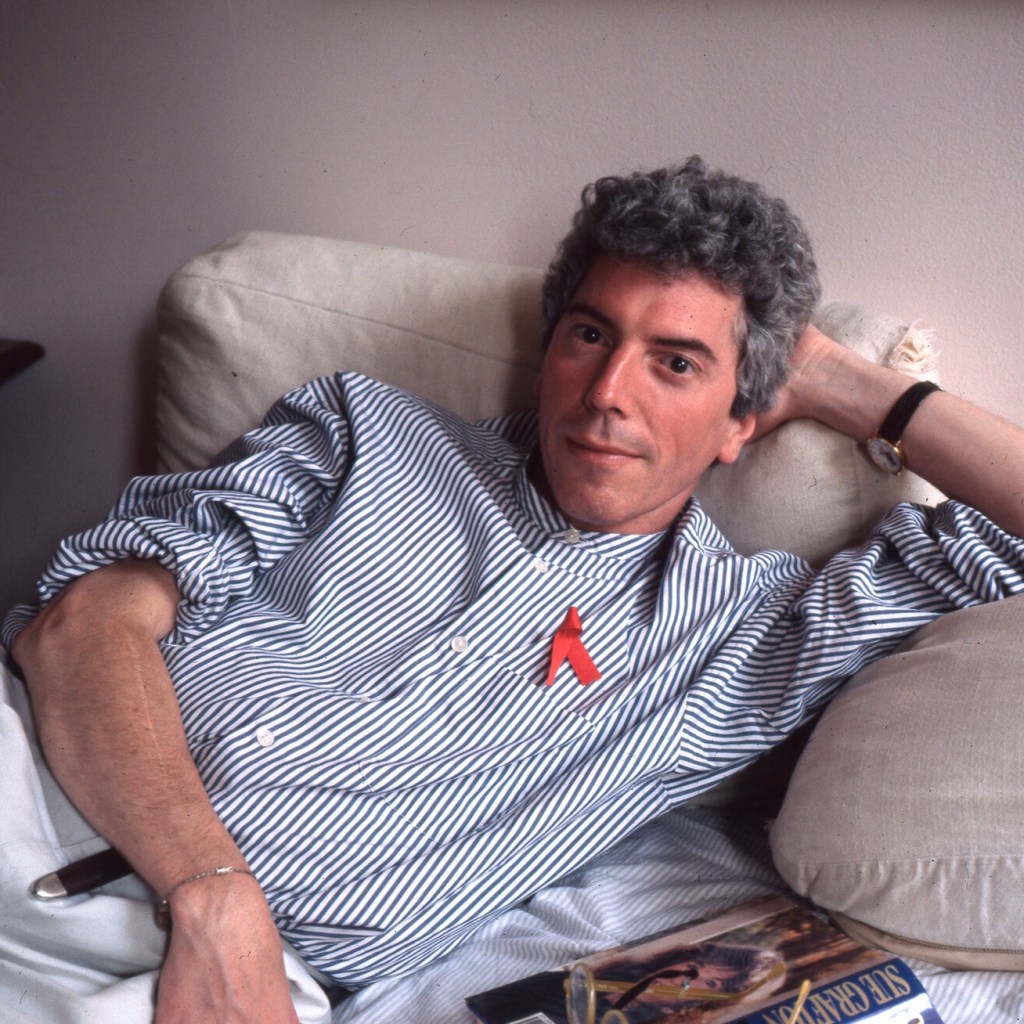
American artist, curator and activist Patrick O’Connell was BOTD in 1953. Born in New York City to a working class Irish-American family, he studied history at Trinity College, before pursuing a career as an artist. After a brief tenure as director of the Hallwalls Contemporary Arts Center in Buffalo, he moved to the Artists Space gallery in Manhattan, supporting artists including Cindy Sherman. Diagnosed with AIDS in the mid 1980s, he also struggled with alcoholism. In 1989, he co-founded Visual AIDS, an advocacy group to support artists living with HIV/AIDS, and began generating conceptual art-based awareness campaigns to draw public attention to the disease. In 1991, he designed a V-shaped red ribbon: the colour representing blood and its sparse design a reminder of public silence around HIV/AIDS. Launched by Visual AIDS as the Ribbon Project, O’Connell helped organise “ribbon bees” to distribute ribbons around New York, and successfully lobbied attendees at the Tony Awards to wear them during the telecast. The ribbons quickly became an international symbol of AIDS advocacy, worn by politicians, grassroots activists and early celebrity adopters including Elizabeth Taylor. O’Connell’s other initiatives included Day Without Art, where New York galleries and museums shrouded their artworks to represent HIV/AIDS deaths, and Night Without Light in which buildings, monuments and bridges in New York dimmed their lights for 15 minutes. He also helped curate Electric Blanket, a 1990 show of portraits of people living with HIV/AIDS, featuring the work of photographers Nan Goldin, Robert Mapplethorpe and Peter Hujar. O’Connell left Visual AIDS in 1995 as his health worsened, though was able to stabilise his condition with the advent of anti-retroviral medication. In 1999, he received an honorary doctorate from Trinity College, and the legacy of his work and activism was revisited in the 2012 documentary How to Survive a Plague and 2013’s Let The Record Show. He was in a long-term relationship with James Morrow until Morrow’s death in 2000. He lived quietly in Manhattan for the remainder of his life, dying in 2021, aged 67.
Patrick O’Connell

 Super Gays Born on this Day