
American writer Charles Reginald (R.) Jackson was BOTD in 1903. Born in Summit, New Jersey, he was raised in upstate New York. He attended Syracuse University, though left during his first year after a “furtive sexual encounter” with a male fraternity member, leading to his being publicly shamed. He worked as a journalist and editor, before contracting tuberculosis in 1927. He spent much of the next five years in sanitoriums in America and Switzerland, eventually having a lung removed. He returned to New York in the 1930s, and married magazine editor Rhoda Booth, with whom he had two children. He became an overnight celebrity with the publication of his 1944 novel The Lost Weekend, a harrowing portrait of a bisexual alcoholic on a five-day drinking binge. A national bestseller, it was successfully filmed in 1945 by Billy Wilder, though the story’s homosexual references were excised to comply with Hollywood censors. Jackson wrote for the popular radio drama Sweet River, and published his second novel The Fall of Valor in 1946. Inspired by Herman Melville‘s homoerotic novella Billy Budd, it chronicled a male college professor’s infatuation with a handsome young Marine. Jackson struggled with alcoholism and barbiturate addiction throughout his life, and was repeatedly institutionalised after multiple suicide attempts. He credited Alcoholics Anonymous with helping him achieve sobriety and made a number of public speeches about his experiences. Beset with financial difficulties, he and his wife separated in the mid 1950s. He moved to New York City, working as a TV story editor while trying to reboot his writing career. Closeted for much of his life, he began to explore his bisexuality, meeting and eventually living with a young Czech immigrant named Stanley. Jackson’s heavy smoking resulted in recurring bouts of tuberculosis, requiring hospitalisation. By 1967, he and Stanley were living at the Chelsea Hotel, where he completed his last published novel A Second-Hand Life, and began work on a sequel to The Lost Weekend. He committed suicide via a barbiturate overdose in 1968, aged 65.
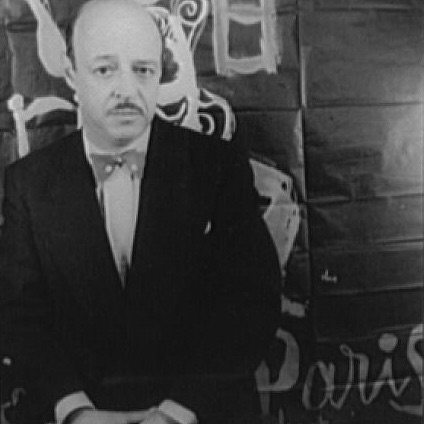
Charles R. Jackson

 Super Gays Born on this Day