
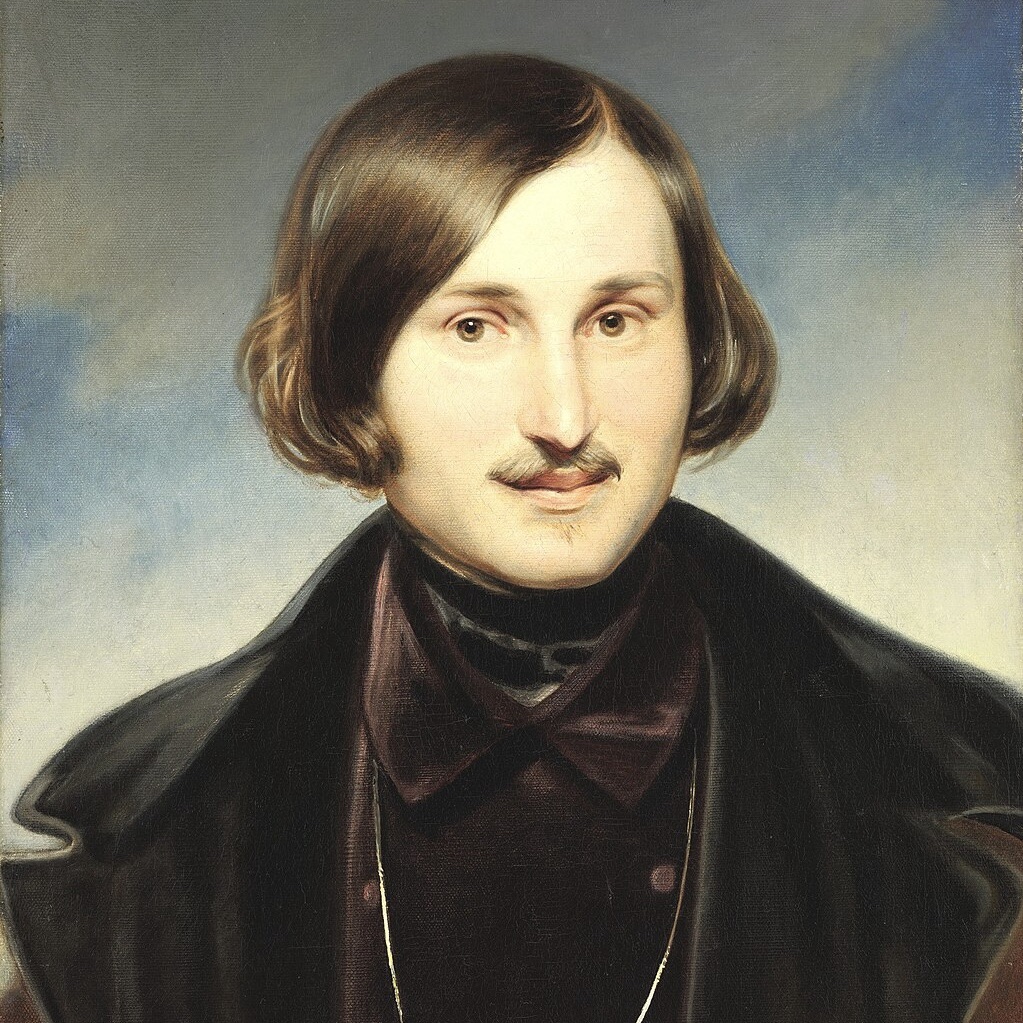
Russian-Ukrainian novelist Nikolai Vasilyevich Gogol was BOTD in 1809. Born in Sorochintsy in Ukraine (at the time part of the Russian Empire), his family were descended from Ukrainian gentry. At 12, he was sent to school at Nezhin, where he excelled at writing, mimicry and theatricals. He moved to St Petersburg in 1828, unsuccessfully trying to join the civil service and failing his acting school audition. He embezzled his mother’s mortgage fund and travelled to Germany, returning to St Petersburg where he found a poor-paying government job. He began writing stories about his rural Ukrainian childhood, publishing them in 1831 under the title Vechera na khutore bliz Dikanki (Evenings on a Farm near Dikanka). He became an overnight celebrity, admired by literary lions including Aleksandr Pushkin. He moved into teaching and continued writing and publishing, shifting from rural romanticism towards pessimism and satire in stories like Zapiski sumasshedshego (Diary of a Madman). His 1836 play Revizor (The Government Inspector), a merciless satire of Tzarist bureaucracy, caused an uproar at its premiere, prompting Gogol to flee to Rome. In 1842, he published the novel Myortvye dushi (Dead Souls), a satire about a social-climbing civil servant. His story Shinel (The Overcoat), also published in 1842, was highly praised, prompting Fyodor Dostoyevsky to write that all Russian realist writers had come “from under Gogol’s greatcoat”. He returned to Russia, becoming increasingly influenced by Orthodox Christianity, and abandoned satire in favour of moral evangelism. In 1847’s Selected Passages from a Correspondence with My Friends, he set out his views on Russia’s moral and worldly improvement, which was poorly received. He became a wandering mystic, settling in Moscow in 1852, where he fell under the influence of the fanatic priest Matvey Konstantinovsky. After confessing his homosexuality to Konstantinovsky, Gogol was ordered to destroy his sequel to Deal Souls and cure his “abomination” and “inner filth” by fasting and resisting sleep. Gogal died in 1852, on the verge of madness, aged 42. Now considered a giant of Russian literature, Gogol’s work has been extensively debated and interpreted. In his 1977 biography, Simon Karlinsky concluded that Gogol’s emotional orientation was homosexual and his repressed desires found expression in the deceptions, mysteries and anxieties permeating his stories.
Nikolai Gogol

 Super Gays Born on this Day