
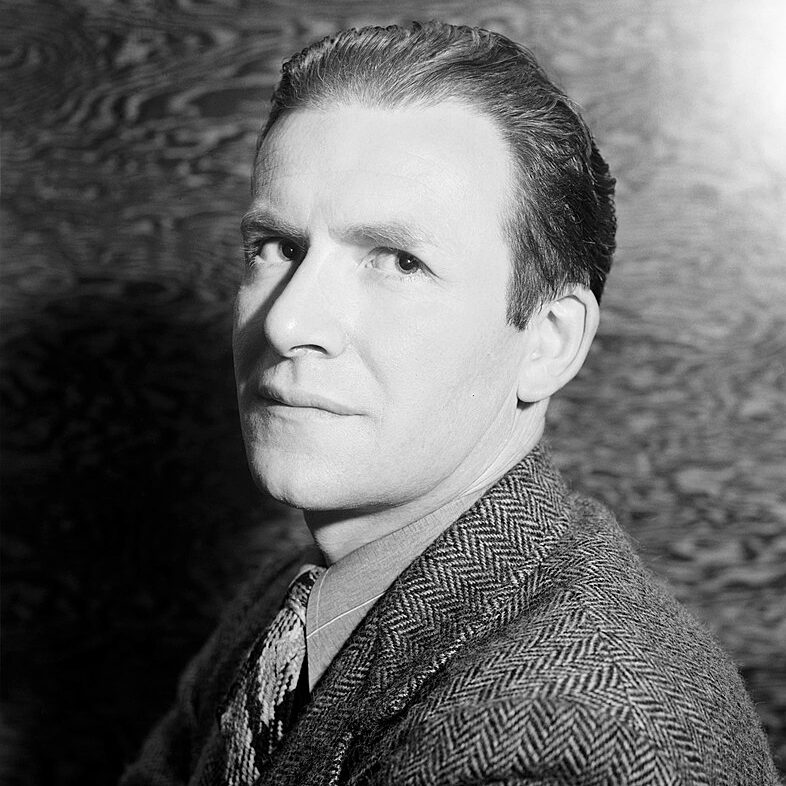
American actor and activist Will Geer was BOTD in 1902. Born William Ghere in Frankfort, Indiana, he was raised by his mother and grandfather after his father left the family home. After studying botany at Chicago University, he moved to New York City to pursue an acting career, studying with Lee Strasberg and touring in travelling theatre productions. A committed Communist, he was active in the trade union movement, where he met Harry Hay, with whom he had a two-year relationship, moving together to Los Angeles. With Hay, he participated in trade union strikes and joining demonstrations for workers’ rights and the unemployed. In 1937, Geer appeared in the premiere of Mark Blitzstein‘s pro-unionist musical Cradle Will Rock and John Steinbeck’s adaptation of his novel Of Mice and Men. He made occasional appearances in Hollywood films, while continuing his activism work, befriending folk singers Woody Guthrie and Pete Seeger, organising performances of Of Mice and Men for migrant farm workers and narrating a 1940 documentary about miners suffering from silicosis. In 1951, he refused to testify before the House Committee on Un-American Activities and was subsequently blacklisted in Hollywood. In 1954 he starred in Salt of the Earth, a pro-unionist film written and produced by blacklisted Hollywood filmmakers. The film’s commercial failure confirmed the end of his Hollywood career, and he returned to work in regional theatre, with sporadic appearances on Broadway. In 1964, he was nominated for a Tony Award for the musical 110 in the Shade, followed by small roles in Jeremiah Johnson and the film adaptation of Truman Capote‘s In Cold Blood. He is best known for playing Grandpa Zeb in TV series The Waltons, a sentimental portrait of a working-class family in Depression-era West Virginia. The role made him a household name, winning him an Emmy Award in 1975. Geer was married twice and had four children, though pursued relationships with men throughout his life. He died in 1978, aged 76.
Will Geer

 Super Gays Born on this Day