
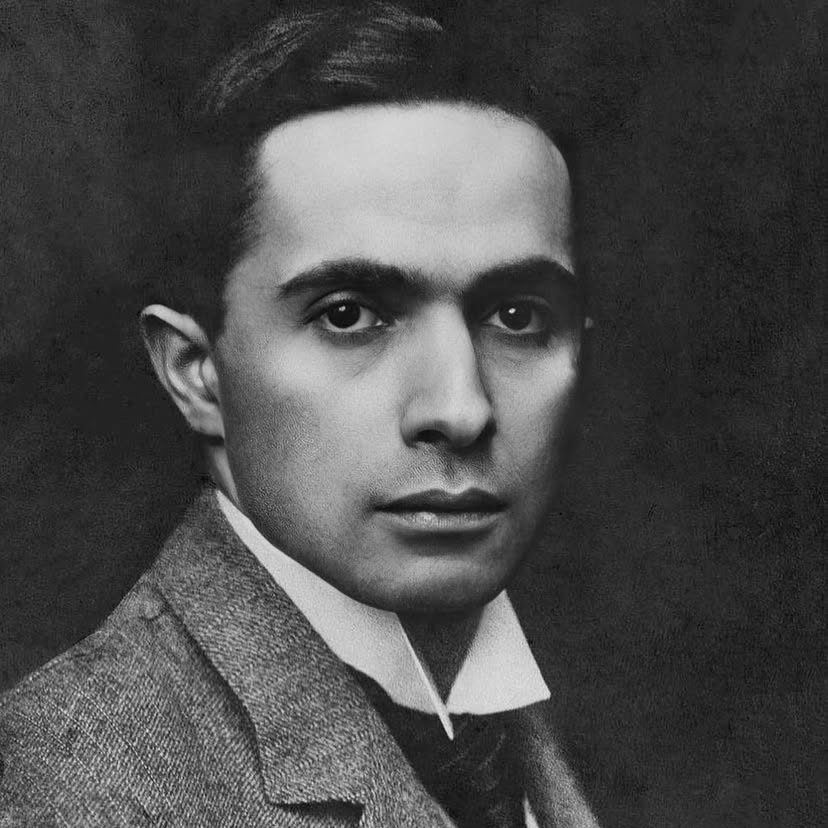
German-American artist and illustrator Joseph Christian (J. C.) Leyendecker was BOTD in 1874. Born in the Montabaur in the German Empire, his family emigrated to the United States when he was a child, settling in Chicago. As a teenager, he apprenticed at the printing and engraving company J Manz & Co, working his way to the position of staff artist, while studying drawing and anatomy at the Chicago Art Institute. He and his brother Frank moved to Paris in 1897, studying for two years at the Academie Julian before returning to Chicago. In 1899, he received his first commission to design a cover for The Saturday Evening Post, beginning a 40-year association with the magazine. He relocated to New York City in 1900, where he began designing for prominent national brands including Gillette Safety Razors, Kellogg’s Corn Flakes, Palmolive Soap, Arrow shirts and Franklin Automobiles. His work for the Post included some of the most iconic visual images of 20th century Americana, including the depiction of Santa Claus as a jolly bearded man in a red fur-trimmed coat, and the popular (white) New Year Baby. He is also credited with popularising the tradition of giving flowers on Mother’s Day, creating popular illustrations of attractive young male bellhops carrying hyacinths. During World War Two, he painted recruitment posters for the United States Army, Navy and Marines and the war effort, producing patriotic (and blatantly homoerotic) images of muscle-bound military men. A keen painter, he made a number of portraits of his male lovers, notably Charles Beach, his partner for nearly 50 years. Leyendecker and Beach lived a glamorous existence, constructing a lavish home in upstate New York where they entertained their celebrity friends. His career faltered after World War Two and he became increasingly reclusive. He died in 1951, aged 77. His work became hugely influential on subsequent generations of artists and advertisers, notably his protégé the artist Norman Rockwell.
J. C. Leyendecker

 Super Gays Born on this Day