
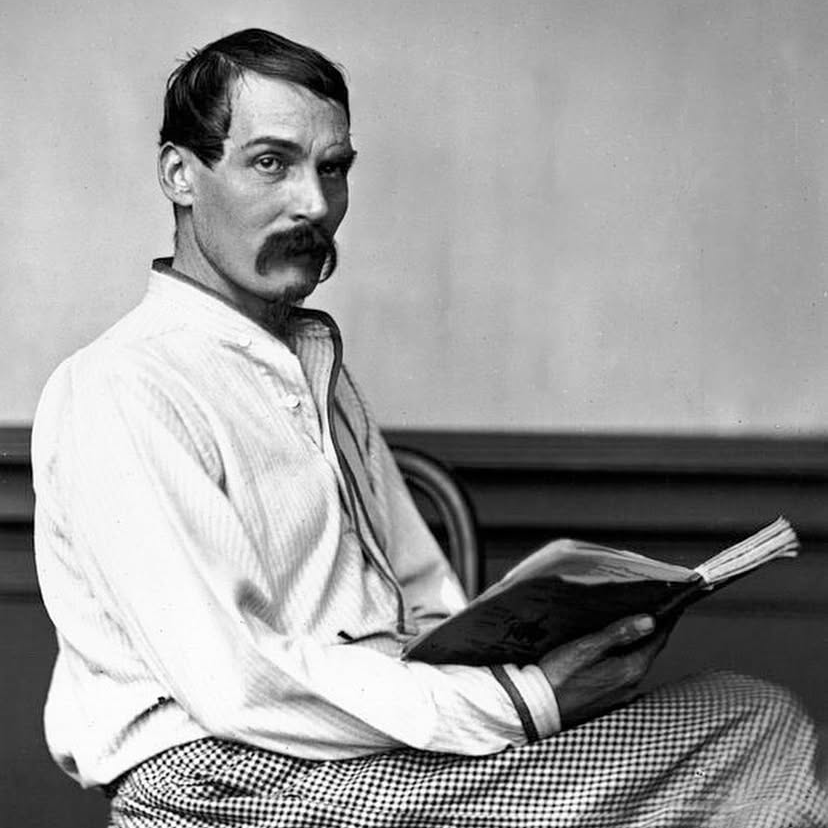
Anglo-Irish explorer, diplomat and sexologist Richard Francis Burton was BOTD in 1821. Born in Torquay, England to an Irish military family, he studied at Oxford University, but was expelled for wild behaviour. He joined the East India Company, baffling his English colleagues by learning multiple languages and studying Eastern religions. Rumours circulated (possibly by Burton himself) that he investigated a male brothel in Karachi, paying for sex with young men to provide an authentic account of its activities. In 1853 he led a secret expedition to Mecca, travelling in disguise and circumcising himself to pass as a Muslim. Supported by the Royal Geographic Society, he and fellow explorer John Hanning Speke led a series of expeditions to central Africa to explore the Great Lakes, surviving chronic illness and attacks by Somali warriors. He and Speke disagreed over the source of the Nile, leading to a highly-publicised debate, ending prematurely after Speke’s sudden death. In 1861, he joined the Diplomatic Service, though his criticisms of British colonial policy resulted in his demotion to remote posts in South America, Damascus and Trieste. Fluent in 37 languages, he published books and articles on his travels, religion, falconry and fencing. His voracious interest in sexuality included translations of erotic texts The Arabian Nights and The Kama Sutra and a long essay on pederasty. In 1885, he published his theory of the “Sotadic Zone,” a geographic area where sodomy and pederasty were prevalent. After a long courtship, he married Isabel Arundel in 1861. Biographers have debated Burton’s possible bisexuality, pointing to his obsession with measuring penis sizes and his much-quoted boast “I’m proud to say I have committed every sin in the Decalogue”. He died suddenly in 1890 aged 69. After his death, Isabel burned his letters, journals and a new translation of The Scented Garden, incurring the hatred of generations of biographers. He is buried in a Bedouin tomb, designed by Isabel, at Mortlake in South-West London, near his childhood school. He was portrayed as a rugged heterosexual by Patrick Bergin in the 1990 film Mountains of the Moon, and as a raging homosexual by John Robinson in the gay musical Zero Patience. Hailed as an advocate of sexual freedom by the 1960s counter-culture, his racist and Orientalist beliefs and shoddy research methods have been criticised by post-colonial theorists and historians.
Richard Francis Burton

 Super Gays Born on this Day