
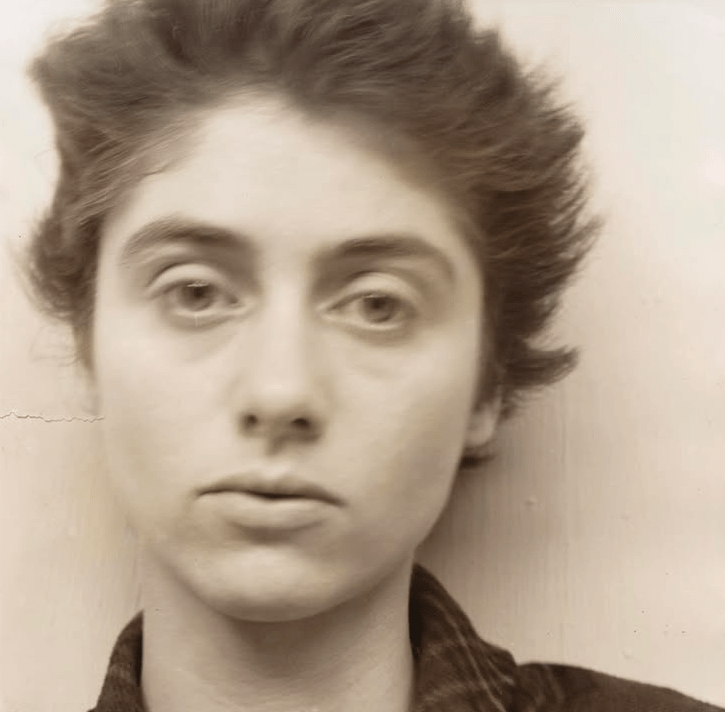
American photographer Diane Arbus was BOTD in 1923. Born Diane Nemerov in New York to Russian Jewish immigrants, she grew up in luxury, raised by nannies and attending prestigious private schools. She married her childhood friend Allan Arbus when she was 18, with whom she had two children, and worked together as commercial photographers. Arbus began experimenting with art photography, studying with Berenice Abbott and Lisette Model. In 1960, she published her first photo essay in Esquire magazine, and became a freelance photographer and teacher. In 1963, she received a Guggenheim Fellowship for a project titled American Rites, Manners and Customs. She developed an intense, intimate form of portraiture, choosing marginalised subjects including strippers, carnival performers, nudists, queer people and the disabled, framing them in a square format and using flash lighting to create stark surrealist images. Some critics saw her work as empathetic to her subjects, while others were disturbed by what they saw as exploitation of the disadvantaged. Her work was championed by the Museum of Modern Art, and she became the first photographer featured in Artforum magazine. Arbus committed suicide in 1971, after years of suffering from depression. Her reputation soared following a 1972 retrospective of her work at MoMA. Now considered one of the most important photographers of the 20th century, her work is credited with expanding notions of acceptable subject matter and collapsing boundaries between photographer and subject. Though Arbus’ relationships were with men, her intense empathy and interest in sexual difference and the deep queerness of her work earns her Honorary SuperGay status. She was portrayed by a miscast Nicole Kidman in the 2006 film Fur: An Imaginary Portrait of Diane Arbus.
Diane Arbus

 Super Gays Born on this Day