
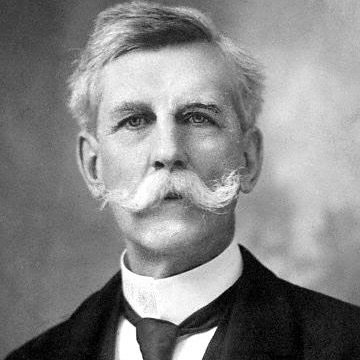
American jurist Oliver Wendell Holmes Jr. was BOTD in 1841. Born in Boston, Massachusetts to a socially prominent family, his father was a renowned doctor and writer. He attended Harvard College, graduating in 1861 and joining the Unionist Army at the outbreak of the American Civil War. He served for three years, surviving multiple battle injuries, returning to Harvard in 1864 to study law. He became close friends with the psychologist William James, and (according to one biographer) had a brief affair with William’s brother, the novelist Henry James. After a two year Grand Tour of Europe, he returned to America to begin his legal career. He published a legal commentary The Common Law in 1881, setting out his theories of statutory interpretation (“In order to know what [the law] is, we must know what it has been, and what it tends to become. We must alternately consult history and existing theories of legislation“). The following year, he was offered a professorship at Harvard and appointed to the Supreme Court of Massachusetts. In 1902, he became a Supreme Court justice, remaining in the role for 30 years. He became one of the most prominent jurists of his age, nicknamed The Great Dissenter for a series of dissenting judgments that became cornerstones of American jurisprudence. His judgments reflected a fascinating blend of conservative and progressive value, insisting that courts should not interfere with legislation unless they can identify a “clear, unmistakable infringement of rights”, while also arguing that the Constitution should be interpreted “in the light of our whole experience, and not merely in that of what was said a hundred years ago.” He established the concept of “clear and present danger” as the only basis for limiting the Constitutional right of freedom of speech, while also upholding State policies of enforced sterilisation, stating “it is better for all the world if… society can prevent those who are manifestly unfit from continuing their kind.” Widely admired in his final years, he retired from the Supreme Court just before his 91st birthday, dying in 1935 aged 93. Holmes married Fanny Dixwell in 1872. Their marriage was childless, but by all accounts happy, and they remained together for over 50 years until her death in 1929. Biographers have also speculated on his intimate friendships with his young male clerks, which appear to have been paternal rather than erotic in nature. His was portrayed by Louis Calhern in the 1950 film The Magnificent Yankee, later reprised for television starring Alfred Lunt.
Oliver Wendell Holmes Jr.

 Super Gays Born on this Day