
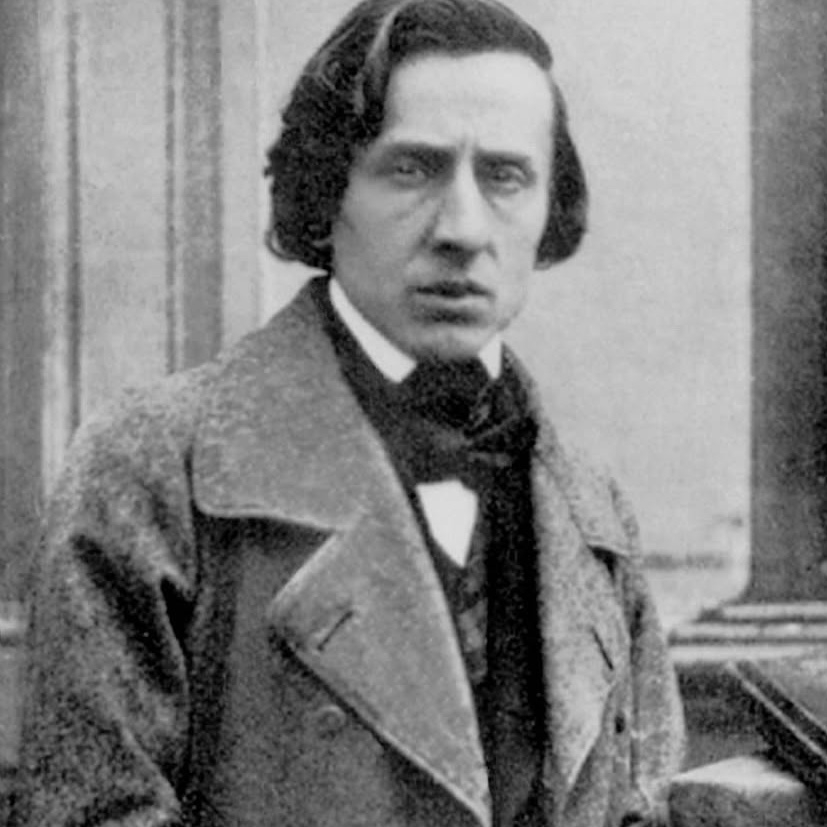
Polish composer and pianist Fryderyk (Frédéric) Chopin was BOTD in 1810. Born and raised in Warsaw, he was a musical prodigy, moving to Paris when he was 20 to further his career. Unlike his friend and fellow virtuoso Franz Liszt, Chopin avoided the concert circuit, preferring to perform in private concerts and supporting himself by selling his music and giving piano lessons. His compositions, mostly written for solo piano, included mazurkas, waltzes, nocturnes, polonaises, ballads, impromptus, preludes and sonatas, though he also wrote chamber music and two piano concertos. His music, influenced by Bach, Mozart, Schubert and Polish folk music, combined sophisticated craftsmanship with profound emotional colouring, expanding the piano’s capacities for dramatic expression and displays of technical skill. Known for his fastidious dress sense, elegant manners, sensitivity, hypochondria and dislike of noise, crowds and children, he nonetheless became a celebrity of the late Romantic period. After his failed engagement to Maria Wodzínska, he had a longer and turbulent relationship with the cross-dressing French writer George Sand. Less well-known but equally as well-documented were his passionate attachments to men, notably his friend Titus Woyciechowski, to whom he wrote a series of yearning love letters. He died in 1849, aged just 39, after a long illness from tuberculosis. Buried in Père Lachaise cemetery in Paris, his funeral was attended by thousands of mourners. One of the most loved and frequently performed of the Romantic composers, Chopin continues to be revered in his home country and around the world. The International Chopin Piano Competition was established in his honour in 1927, as was Warsaw’s international airport. Details of his possible bisexuality have been censored by Poland’s aggressively homophobic government, and continue to be excluded from many biographies. He was portrayed by Hugh Grant as an effete consumptive in James Lapine’s 1991 film Impromptu.
Frédéric Chopin

 Super Gays Born on this Day