
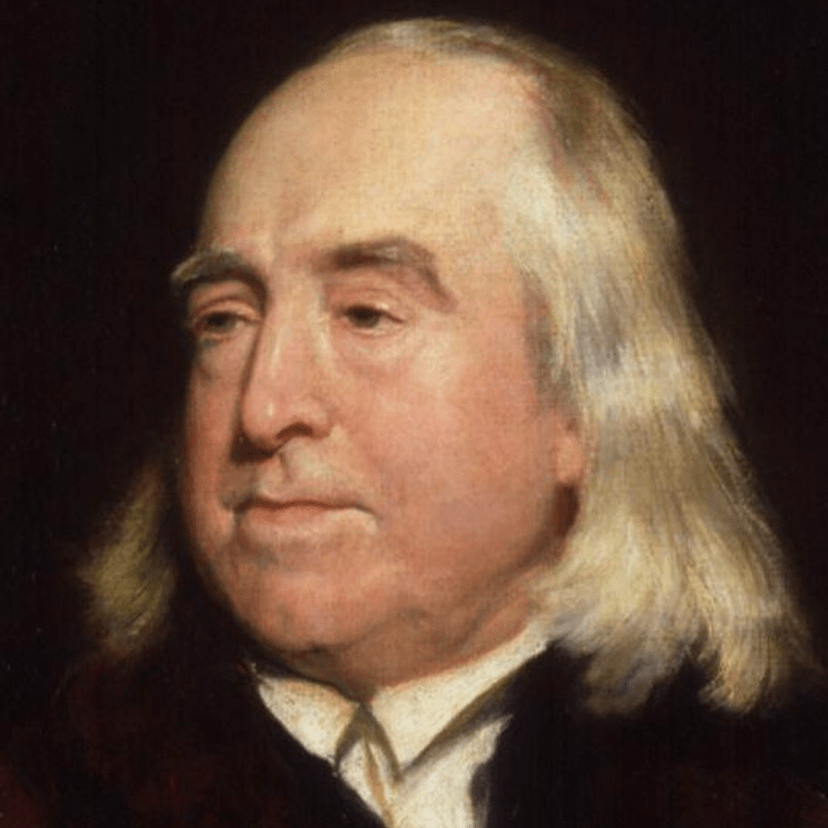
English philosopher and social reformer Jeremy Bentham was BOTD in 1747. Born in London to a wealthy middle-class family, he was a child prodigy, studying Latin at the age of three and playing violin sonatas for dinner guests aged seven. Educated at Westminster School and Oxford University, he trained as a lawyer before moving into legal and social reform. A prominent writer and philosopher, he popularised the idea of utilitarianism, in which right and wrong is decided by the greatest happiness of the greatest number of people. He also advocated for the separation of church and state, freedom of expression, equal rights for women, the right to divorce, the abolition of slavery, capital and corporal punishment, and was an early proponent of animal rights. His “panopticon” model for prisons, while rejected in his own time, became hugely influential on prison reform. In his 1785 essay Paederasty (Offences Against One’s Self), unpublished in his lifetime, he argued for the legalisation of homosexuality, arguing that same-sex acts do not “weaken men” or threaten population or marriage, and critiquing the harsh persecution of homosexual men. Bentham never married or had children, prompting some biographical speculation that he may have been gay, though little evidence exists to support this theory. He died in 1832, aged 84, instructing that his body be preserved as an “auto-icon” after his death. His embalmed and fully dressed body is on permanent display at the Student Centre at the University College of London.
Jeremy Bentham

 Super Gays Born on this Day