
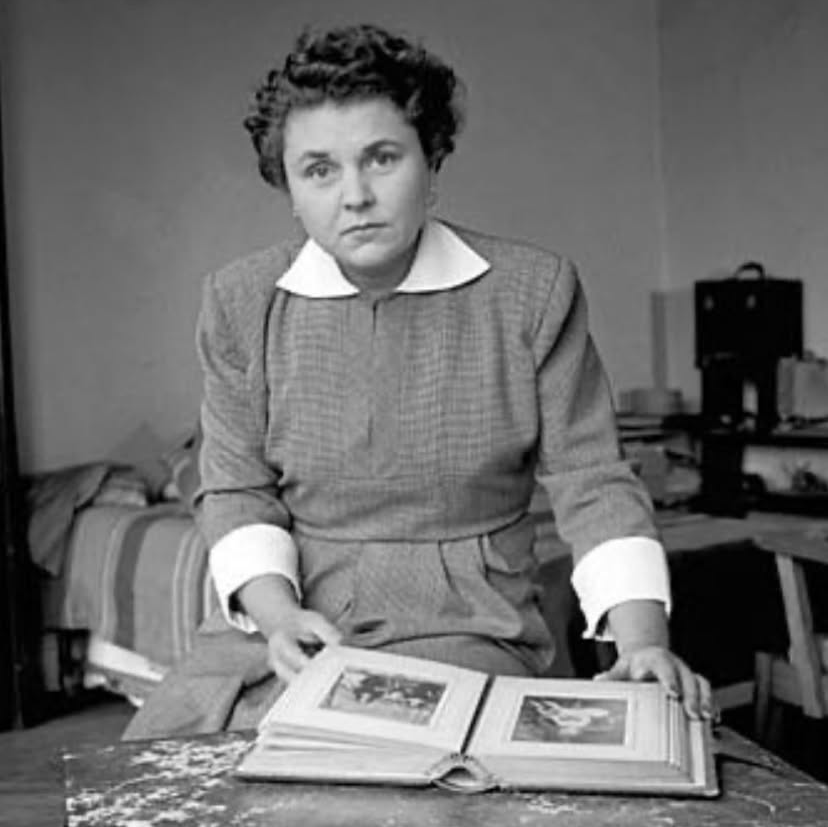
American poet Elizabeth Bishop was BOTD in 1911. Born in Worcester, Massachusetts, her father died when she was an infant, and she was raised relatives after her mother was institutionalised. She was educated at Vassar, where she met poet Marianne Moore, who became a lifelong friend and mentor. Moving to New York after graduation, she befriended Mary McCarthy and Robert Lowell, and began writing and publishing poetry. Independently wealthy, she travelled extensively, living in Paris during the 1930s with her friend (and probable lover) Louise Crane, moving together to Florida at the start of World War Two. Her first poetry collection, North and South, was published in 1946 to critical acclaim. In the 1950s, she travelled to South America, settling in Petrópolis in Brazil and forming a relationship with architect Lota de Macedo Soares. Her next collection, A Cold Spring, was published in 1956, winning the Pulitzer Prize. Unusually for her generation, she shunned the confessional poetry popularised by Lowell and Sylvia Plath, refusing to speak about her personal life, adopting an objective poetic voice. She also rejected monikers of “female poet” or “lesbian poet”, refusing to have her work published in feminist poetry anthologies. When her trust fund dried up in 1970s, she became an academic, teaching at Harvard, New York University and Massachusetts Institute of Technology. She began a relationship with Alice Methfessel in 1971, who became her literary executor. They remained together until Bishop’s death in 1979, aged 68.
Elizabeth Bishop

 Super Gays Born on this Day