
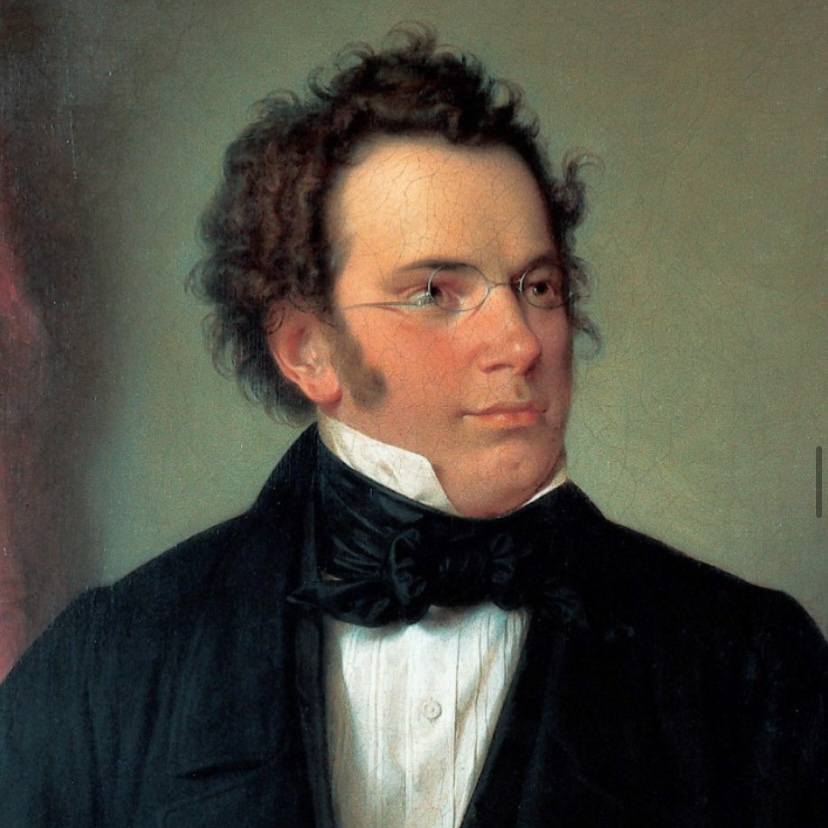
Austrian composer Franz Schubert was BOTD in 1797. Born in Vienna, he showed an early talent for music, and won a scholarship to the Stadtkonvikt, where he sang in the Imperial Court chapel choir and was tutored by Antonio Salieri. He began composing music in his teens and trained as a schoolteacher, working in his father’s school and writing in his spare time. Bridging Classical-era composition with the newly fashionable Romantic style, his work ranged from church music and symphonies to chamber pieces and lieder. In 1818, he left Vienna to become music master to Court Esterházy in Hungary. Returning to Vienna in 1819, he composed one of his best-known works, the Trout Quintet for piano and strings. His work became hugely popular among Viennese bourgeois society, but he failed to find success in opera or large-scale concert performances. He contracted syphilis in 1822, possibly from a trip to a brothel. Persistent illness drove his work in a darker direction, including his Death and the Maiden string quartet, the melancholy song cycle Winterreise and his final three piano sonatas, now considered masterpieces of the Romantic period. He died in 1828 aged 31. Musicologist Maynard Solomon argues that Schubert was likely attracted to men, based on his close male friendships and the persistent themes of suppressed desire and unrequited love in his work, though this has been vigorously disputed by many of his biographers.
Franz Schubert

 Super Gays Born on this Day