
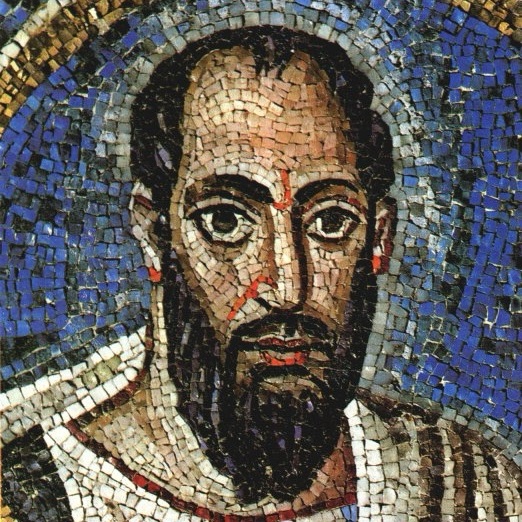
Turkish-Roman evangelist and writer Paul of Tarsus, also known as Saint Paul and Paul the Apostle, was born in circa 5 AD. Born in Tarsus, Cilicia in the Roman Empire (now modern-day Turkey), he was named Saul and raised in a devout Jewish family of Pharisees, also using the Latin name Paul or Paulus. Much of the details of his life come from his own letters and writings, notably the book of the Acts of the Apostles in the New Testament. He claimed to have learned how to work with his hands, training as a leather worker and tent maker, and appears to have received some formal education, learning to read and write in Greek. By his own account, he was an avid persecutor of the early Christian church, travelling to synagogues and urging the punishment of Jews who accepted Jesus of Nazareth as the Messiah (son of God). While travelling to Damascus in c. 33 CE, he claimed to have had a blinding vision of Jesus, falling from his horse and experiencing a religious conversion. After travelling to Jerusalem to meet Jesus’ disciple Peter, Paul undertook a series of evangelical missions throughout Europe and Asia Minor, converting a number of Gentiles (non-Jews) to Christianity. Arrested multiple times by Roman forces, he was arrested in Jerusalem in 57 AD after bringing a Gentle into a Jewish temple, inciting a riot, and was imprisoned for two years. He is thought to have been executed in c. 67 AD as part of the Emperor Nero‘s persecution of Christians following the Great Fire of Rome, and was buried along the Via Ostiensis outside the city walls of Rome. Recognised as a saint and martyr immediately after his death, his letters to Christian fellowships in Galatia, Corinth, Rome and Ephesus were collated posthumously and included in the New Testament, making him the most important Christian theologian after the authors of the four Gospels. His writings emphasised Jesus’ divine status, resurrection and eventual return, and his commitment to his own mission as God’s missionary. Also notable were his injunctions against sex and apparent discomfort with his body (writing about “a thorn in the flesh” given to him by “a messenger of Satan to buffet me, lest I be exalted above measure“), his insistence that women “be silent in the churches” and condemnation of people exchanging “natural relations for those that are contrary to nature“. A lifelong bachelor, who was described by 3rd century theologian Methodius of Olympus as a “bride of Christ”, Paul’s personal life and sexuality has been extensively debated by theologians. In his 1991 book Rescuing the Bible from Fundamentalism, the Episcopal cleric John Shelby Spong made a case for Paul as a “rigidly controlled gay male”, arguing that Paul’s struggles between “what he desired with his mind and what he desired with his body” were central to his religious conversion and zealous embrace of Christianity. Paul’s possible homosexuality has inspired a number of fictional portrayals, notably Christos Tsioklas‘ 2019 novel Damascus. He was first played onscreen by Neil Arden in the 1938 film Life of St Paul, and has since been portrayed by actors including Patrick Troughton, Edoardo Torricella, Anthony Hopkins, Philip Sayer, Harry Dean Stanton and James Faulkner. Paul’s conversion to Christianity is commemorated on 25 January, while his major feast day, shared with Saint Peter, is celebrated on 29 June.
Saint Paul of Tarsus

 Super Gays Born on this Day