
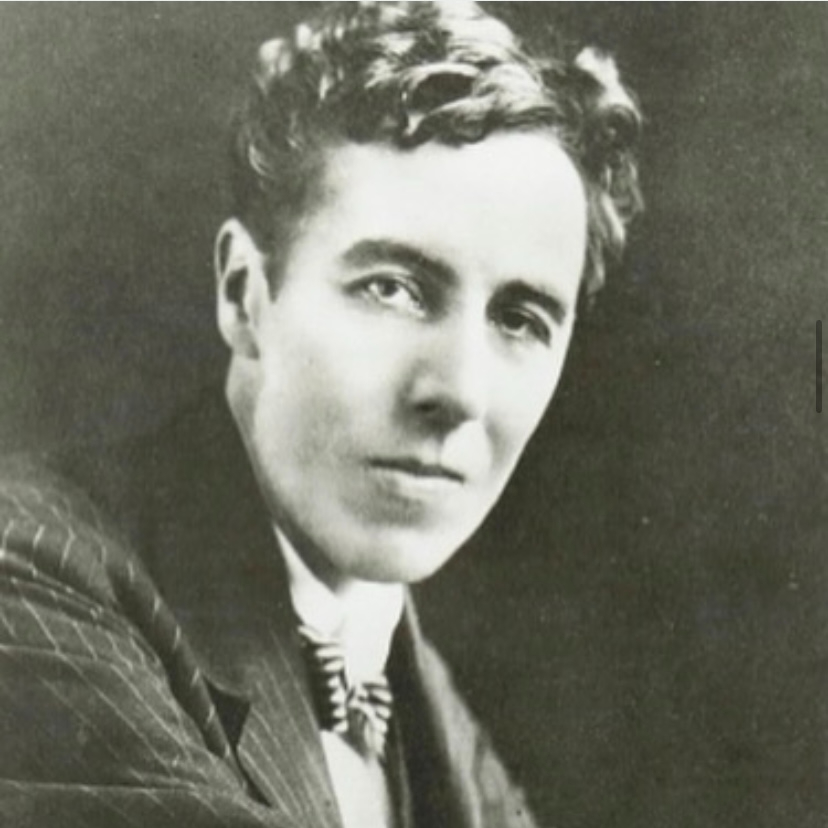
English novelist Ronald Firbank was BOTD in 1886. Born in London to an aristocratic family, he studied at Cambridge where he wrote short stories, converted to Catholicism and left without taking a degree. Living off his grandfather’s inheritance, he travelled extensively through Spain, Italy, the Middle East and North Africa, indulging his passions for alcohol, cannabis and Black men. Suffering from poor health for most of his life, he became a Wildean aesthete, famously wearing two dressing gowns at once, painting his nails, owning only books bound in blue leather and living on champagne and flower petals. He wrote a number of short novels and plays, including Concerning the Eccentricities of Cardinal Pirelli, The Flower Beneath the Foot and Valmouth, notable for their baroque language, absurdist storylines and queer-coded characters. He died in 1926 aged 40. Largely unpublished in his lifetime, his work was championed by queer writers including Evelyn Waugh, E. M. Forster and W. H. Auden, and is thought to be the model for the gay aesthete Cedric Hampton in Nancy Mitford‘s novel Love in a Cold Climate. Susan Sontag included his novels as part of “the canon of camp” in her 1964 essay Notes on Camp. His writing was referenced in Alan Hollinghurst‘s 1988 debut novel The Swimming-Pool Library, re-establishing his status in the queer literary canon.
Ronald Firbank

 Super Gays Born on this Day